Looking for fence ideas that feel fresh, modern, and budget-friendly? Hog wire fencing checks all those boxes. Sometimes called livestock or utility panel fencing, hog wire uses sturdy welded wire grids framed with wood or metal for a look that’s clean, durable, and incredibly versatile. Whether you want to keep pets in, define a garden, or open up sightlines without sacrificing safety, these hog wire fence design ideas will help you plan a beautiful, long-lasting upgrade.
Before we jump into the list, remember: materials matter. Exterior-rated wood (cedar, redwood, or pressure-treated), galvanized or powder-coated mesh, corrosion-resistant screws, and accurate measurements will set you up for success.
1) Warm Cedar Frame + Black Mesh Modern Layout
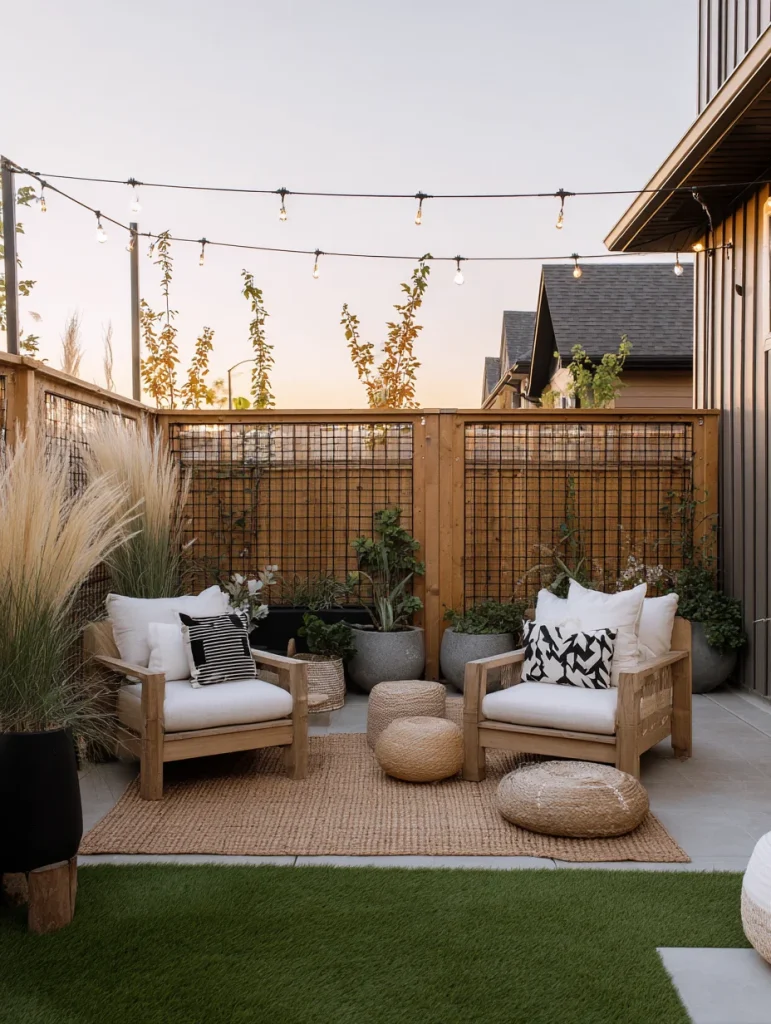
Pair the warmth of cedar with sleek, black-coated wire panels for a high-contrast, modern fence that complements contemporary homes and boho-eclectic patios alike. Keep posts and frames chunky (3.5–5.5 inches) for a tailored feel, and orient the mesh vertically to elongate your yard. To finish, lightly sand and seal the cedar to maintain its honey tone or let it weather to a silvery patina for a more organic vibe. This direction blends beautifully with neutral outdoor furniture, layered planters, and soft textiles.
2) Farmhouse Grid With White Paint and Climbing Vines
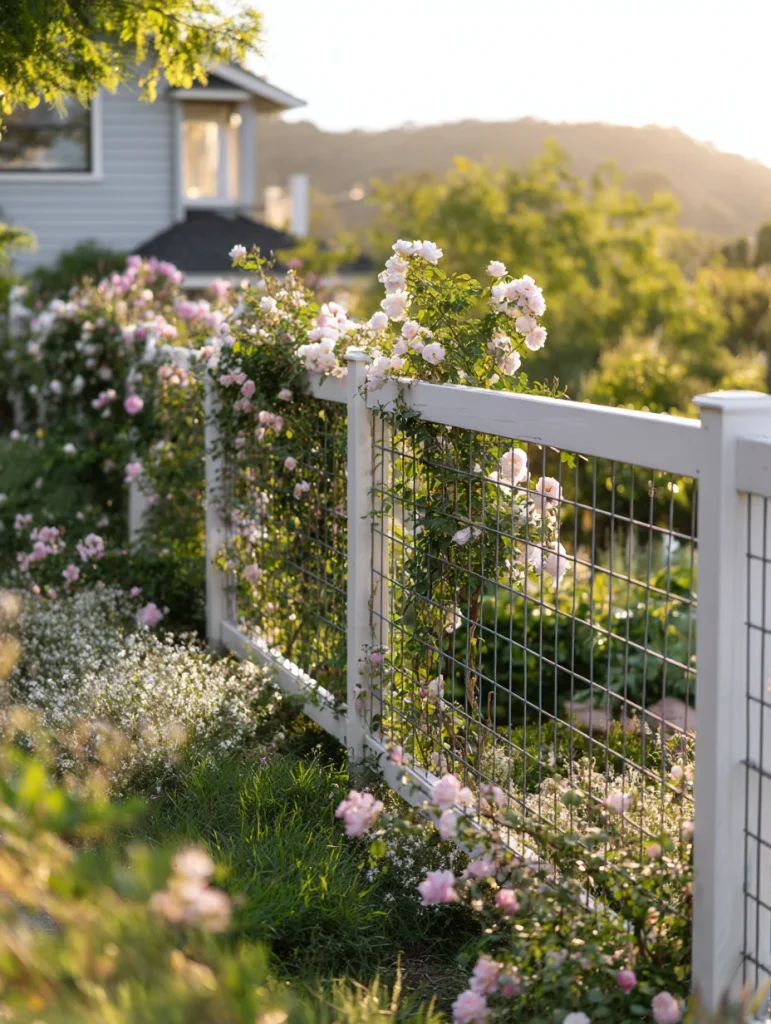
Craving cottage charm? Paint the wood frame crisp white and let galvanized mesh shine through as a neat grid backdrop for greenery. Add trellis-friendly favorites such as jasmine, star clematis, or climbing roses to soften lines and add fragrance. Keep the bottom of the mesh 2–3 inches off the ground to avoid moisture wicking into the frame. This idea is perfect for front yards, kitchen gardens, and porches where you want personality without blocking views.
3) Hog Wire Fence With Built-In Planter Boxes
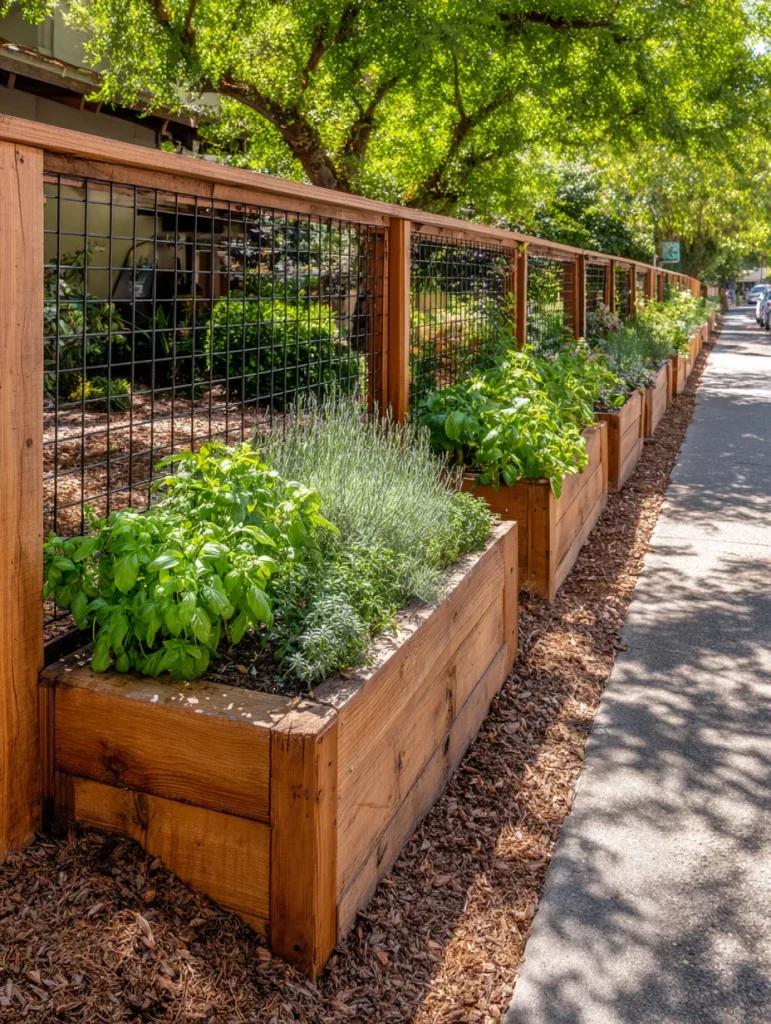
Turn a boundary into a blooming feature by integrating planter boxes along the base of your hog wire panels. Use rot-resistant lumber and line boxes with landscape fabric for drainage. Plant a mix of trailing herbs, compact grasses, and seasonal color to give your fence a lush, layered look. Bonus: planters add weight and stability to shorter spans, while the mesh grid supports climbing edibles like peas and cucumbers for a functional kitchen garden wall.
4) Horizontal Timber Rails With Tall Hog Wire Panels
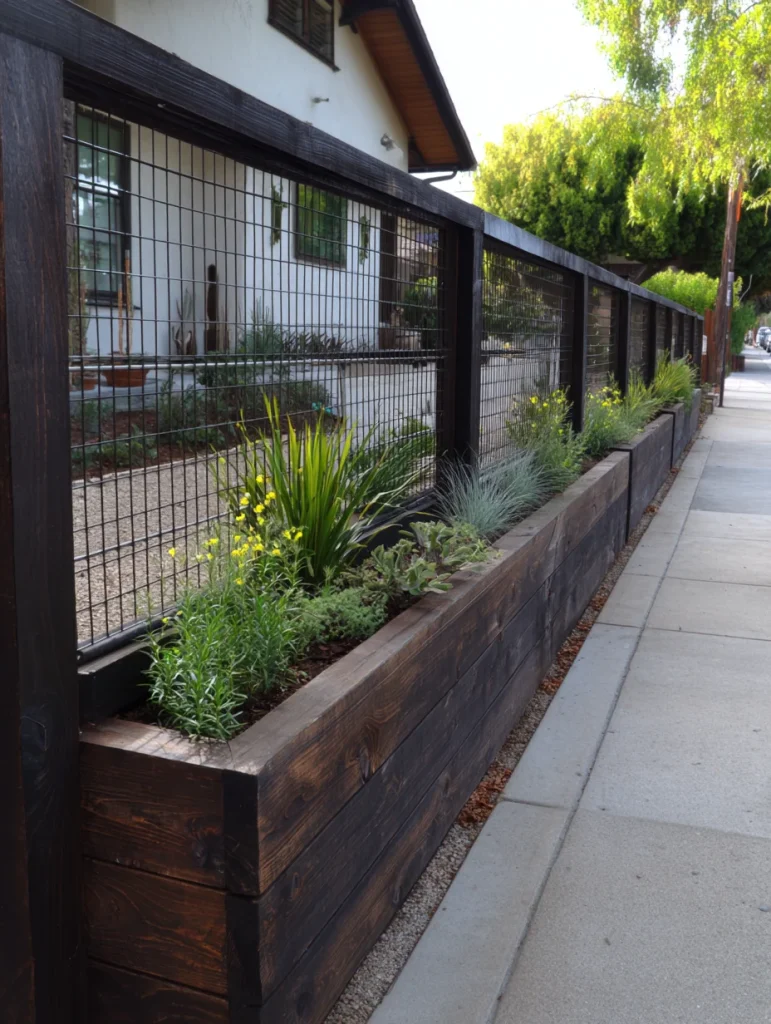
Emphasize width and architectural lines by running horizontal rails between posts, then insetting tall wire panels. This creates a custom, mid-century-inspired profile that plays well with slatted benches and low, wide planters. Opt for a 4-inch grid mesh for an airy feel and keep your top rail thicker than the mid-rails for a designer finish. Stain the rails a deep espresso or charcoal for drama, or choose a clear oil for a natural, Scandinavian look.
5) Courtyard-Style Entry Gate in Hog Wire and Steel
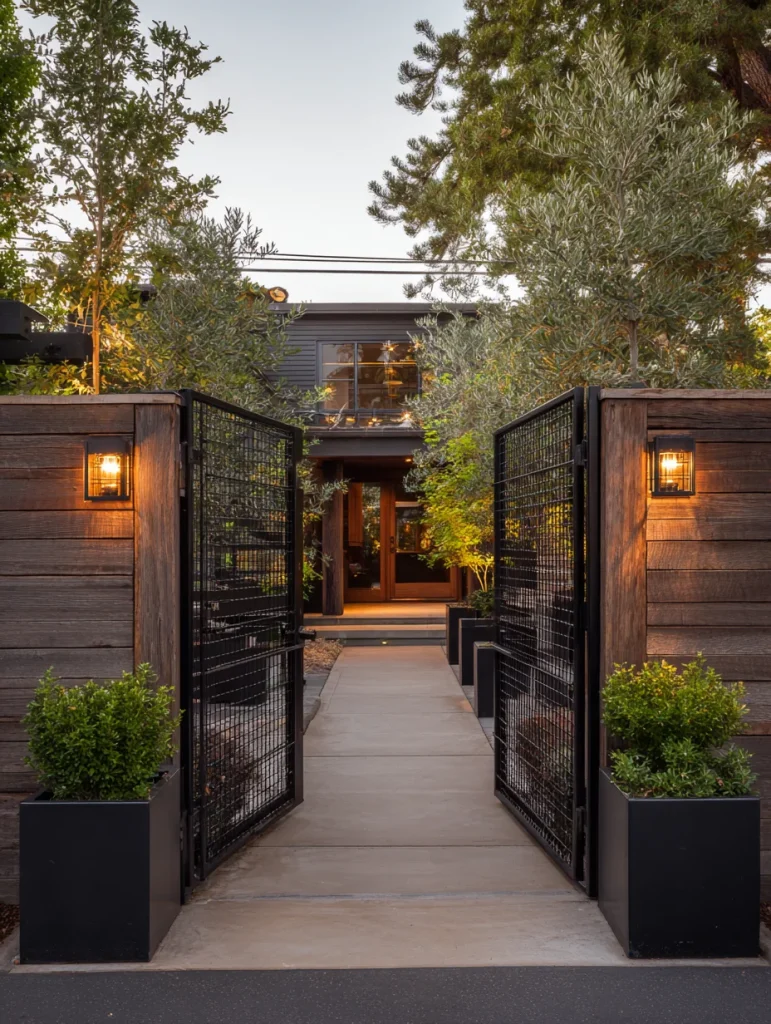
Make an entrance with a steel-framed hog wire gate paired with wood posts. A squared-off, matte-black frame outlines the mesh beautifully and feels secure without appearing heavy. Repeat that metal detail on house numbers or mailbox hardware to tie the look together. For a welcoming touch, add a simple arch of string lights above the gate and a pair of oversized planters flanking the entry—instant boutique-hotel energy for your front walk.
6) Privacy Hybrid: Hog Wire Top, Solid Board Bottom
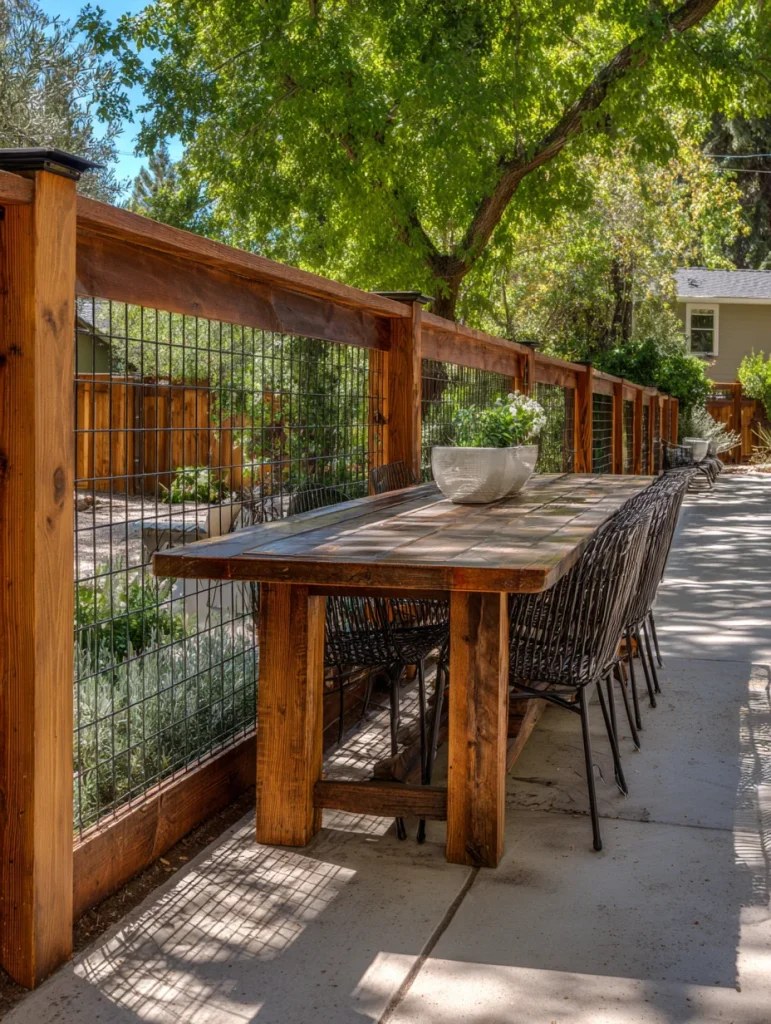
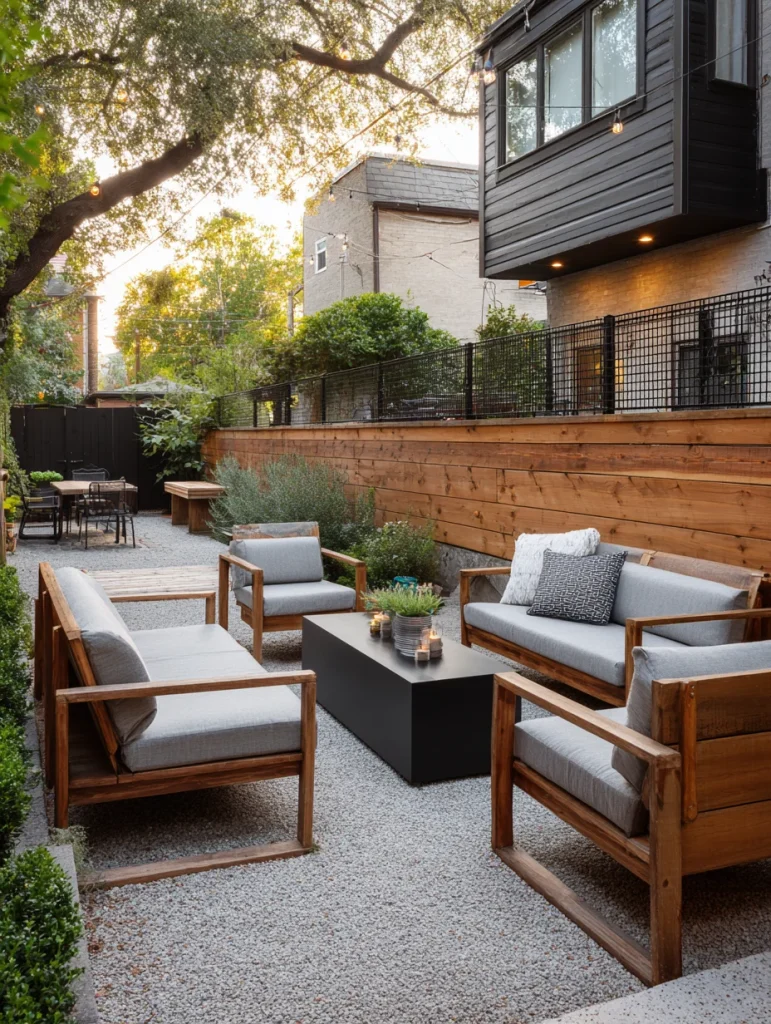
Want light and air up top but privacy below? Combine a solid wood base (about 36–48 inches high) with a hog wire panel in the top section. This hybrid design blocks street-level views yet preserves breeze and sky, which is great for patio dining areas. For cohesion, match the stain across both sections and use a consistent post profile. You can echo the grid motif by choosing outdoor furniture with woven textures or cane details.
7) String Light Pergola With Hog Wire Perimeter
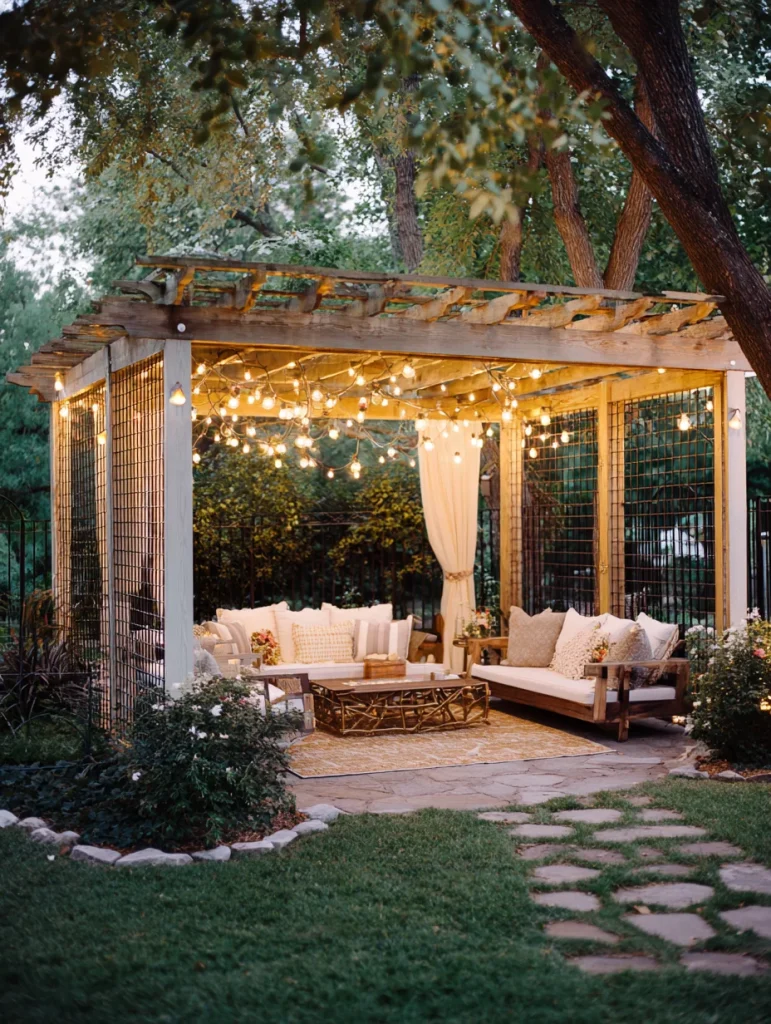
Create a destination by building a compact pergola and wrapping the surrounding perimeter with hog wire fencing. The mesh makes a perfect anchor for string lights and lantern hooks, while the pergola defines space for dining or a lounge set. Introduce outdoor curtains for softness and a bit more seclusion when you’re entertaining. Keep everything grounded with a paver or gravel base in a contrasting tone to your frames for a designer-quality finish.
8) Sloped Yard Solution With Stepped Hog Wire Sections
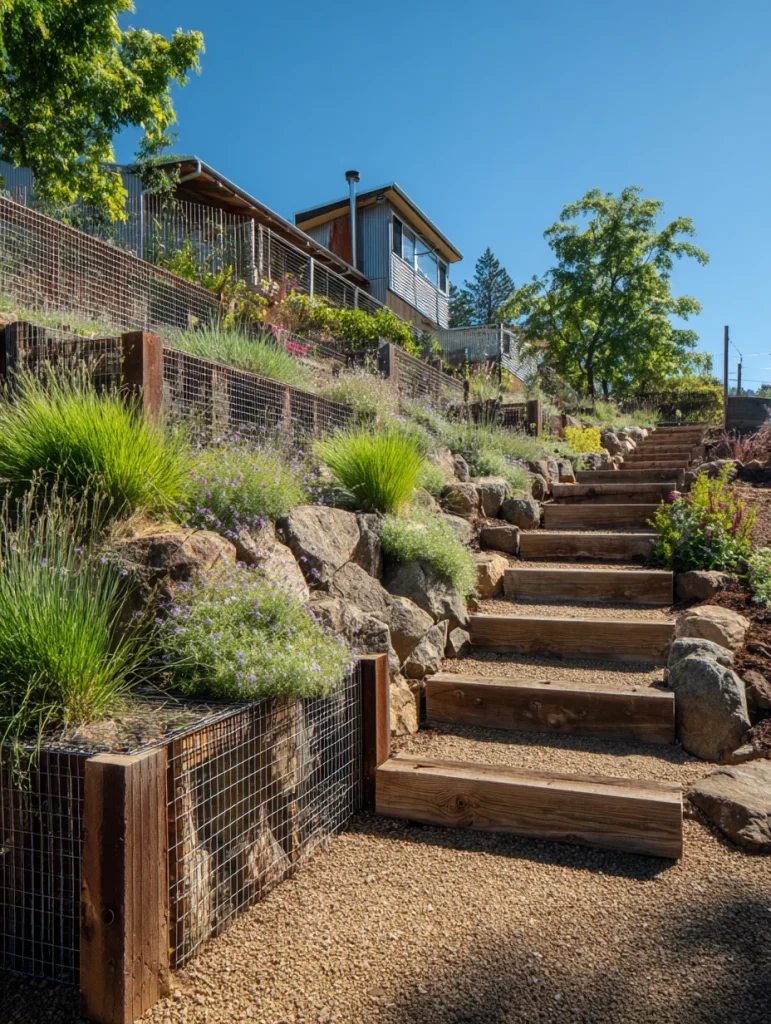
On an incline, step your hog wire panels to follow grade while keeping each section perfectly level. This technique looks crisp, prevents awkward angles, and makes installation easier than racking the mesh. Keep the step height consistent (usually 4–8 inches) for rhythm, and consider a cap rail across the tops to visually tie sections together. Plant drift-style perennials along the rise to soften transitions and highlight the terraced effect.
9) Pet-Ready Hog Wire Dog Run That Looks Chic
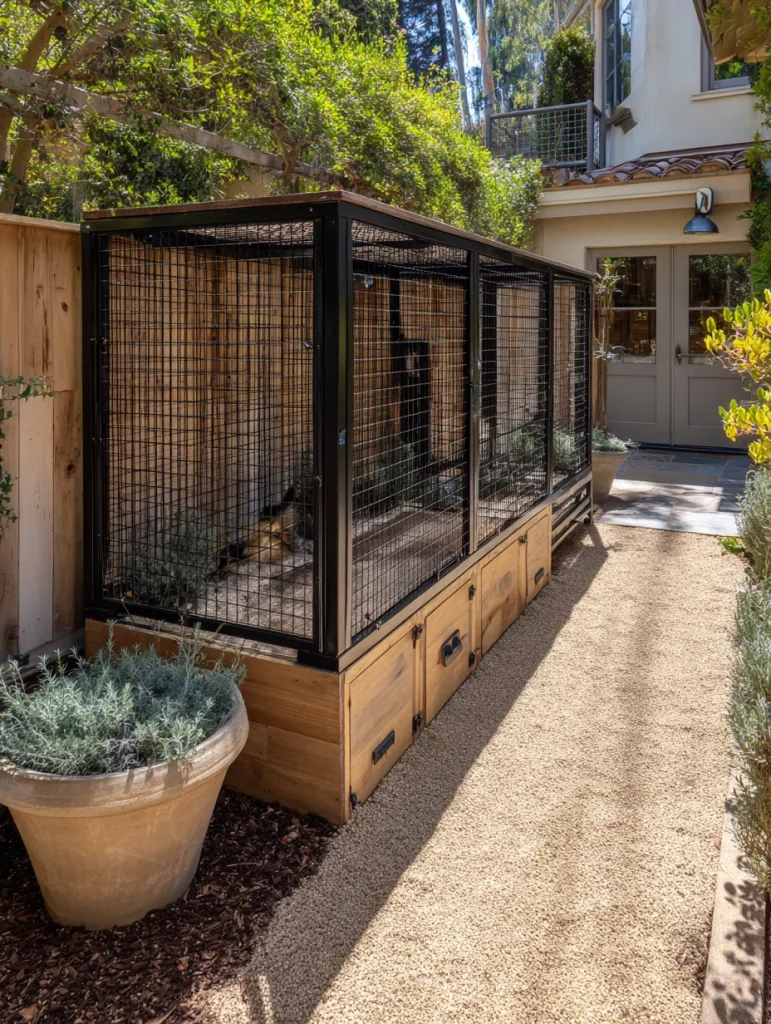
Design a dedicated dog run that blends with your landscape by using hog wire panels with a smaller grid (2-by-2 inches) and a secure latch gate. Add shade with a sail or pergola section, and incorporate a gravel or decomposed granite floor for easy cleanup. Style it up with a matching storage bench for leashes and toys, plus a low planter of hardy, non-toxic shrubs. Sticking to the same stain color as your main fence keeps the whole yard cohesive.
10) Balcony or Deck Guardrail in Hog Wire
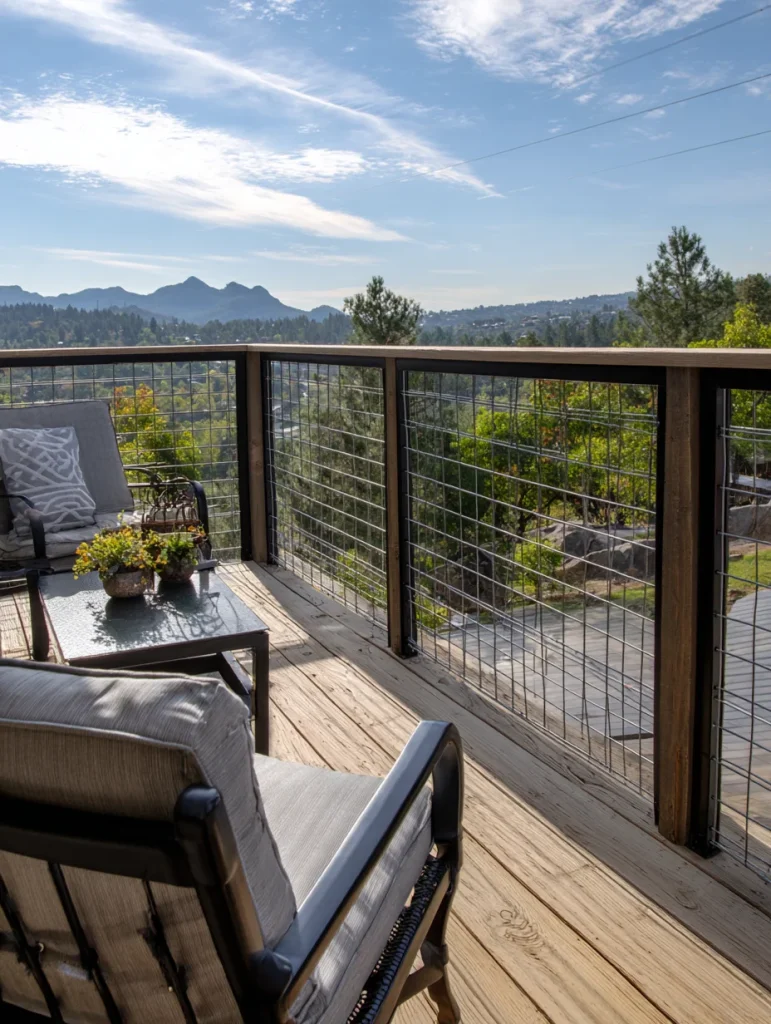
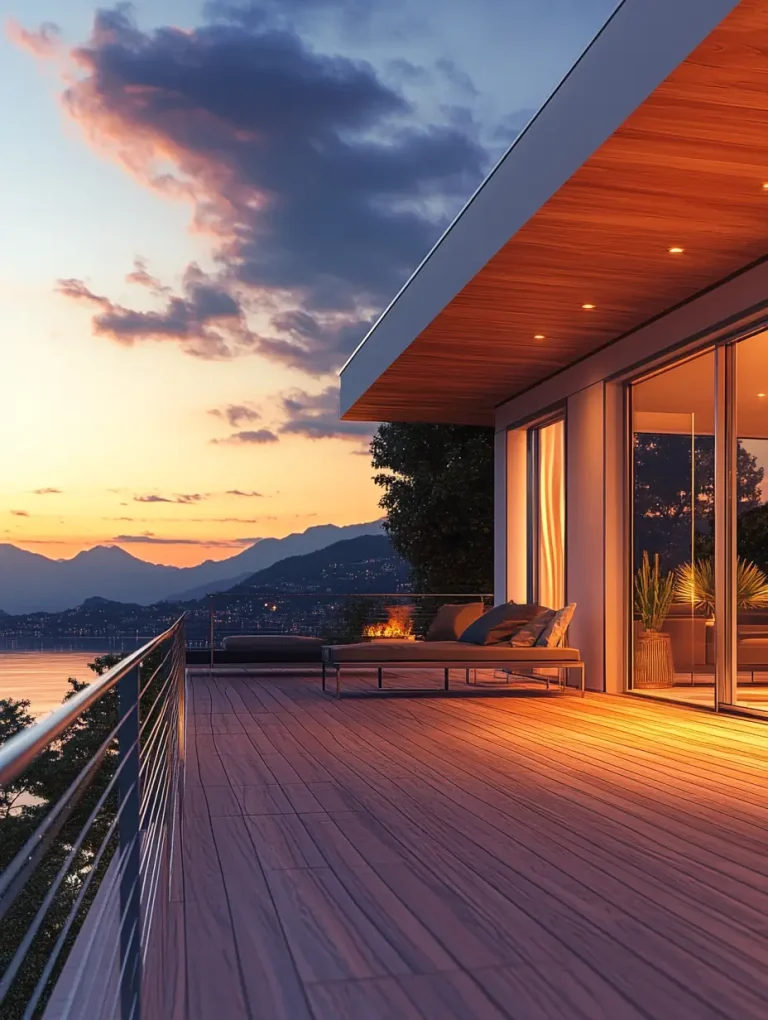
Open up views from a raised deck or balcony by swapping heavy balusters for hog wire railing panels. When framed properly and built to local code, the grid provides excellent safety with a lighter, more modern look. Align panel joints with posts for strength and symmetry, and cap the top with a smooth handrail that’s comfortable to the touch. A monochrome palette—black mesh, dark stain, charcoal furniture—turns the whole deck into a sleek outdoor room.
Planning Tips for a Polished Finish
- Measure twice: Plan post spacing to match panel dimensions; aim for uniform spans for the cleanest look.
- Hardware matters: Use exterior-grade screws, galvanized staples or clips, and corrosion-resistant brackets.
- Elevate the mesh: Keep it off soil to prevent rot in wood frames; add gravel under runs for drainage.
- Seal the deal: Stain or seal wood before assembly to protect hidden surfaces.
- Style cohesively: Repeat colors and metals from your fence in lighting, planters, and furniture.
FAQs
How much does a hog wire fence cost?
Costs vary by region and materials, but expect roughly $20–$45 per linear foot for DIY builds using wood frames and galvanized mesh, and more for powder-coated steel or custom gates. Taller fences, sloped yards, and premium wood species (cedar/redwood) will increase your budget. Plan on contingency for hardware and finishes.
Is a hog wire fence durable?
Yes—especially when you choose galvanized or powder-coated mesh and exterior-grade lumber. Elevating the mesh from soil, sealing wood, and using corrosion-resistant hardware extends longevity significantly. In coastal or high-humidity zones, consider stainless fasteners and more frequent maintenance coats.
Does hog wire provide privacy?
By itself, hog wire is transparent, which is great for sightlines and small yards. If you want privacy, opt for hybrid designs with a solid lower section, add outdoor curtains, plant hedges or tall grasses, or train vines along the mesh. These solutions soften views while keeping airflow.
Is hog wire safe for kids and pets?
It can be, provided the grid size is appropriate and all edges are properly framed. For small pets, use a tighter mesh (2-by-2 inches). Ensure gates latch securely and that there are no exposed wire ends. Always follow local building codes for railings and guard heights on decks and balconies.
Do I need permits or HOA approval?
Often, yes. Many municipalities and HOAs regulate fence height, style, and placement—especially in front yards and on corners. Check codes first, gather material specs, and submit drawings if required. It’s easier to adjust on paper than after posts are set.
Conclusion
From sleek cedar frames to privacy hybrids and planter-integrated runs, these 10 hog wire fence ideas prove you can balance style, function, and budget. Choose a palette that matches your home, pick quality materials, and repeat a few finishes across lighting and planters for a cohesive, designer look. If this inspired you, save it to Pinterest, share it with a friend, and start decorating—your upgraded yard is closer than you think.