A tiny dining area can still deliver big on comfort, conversation, and everyday style. Whether your table shares space with the kitchen or lives in a compact nook, these small dining room ideas will help you make every square inch work harder—without sacrificing warmth or wow-factor.
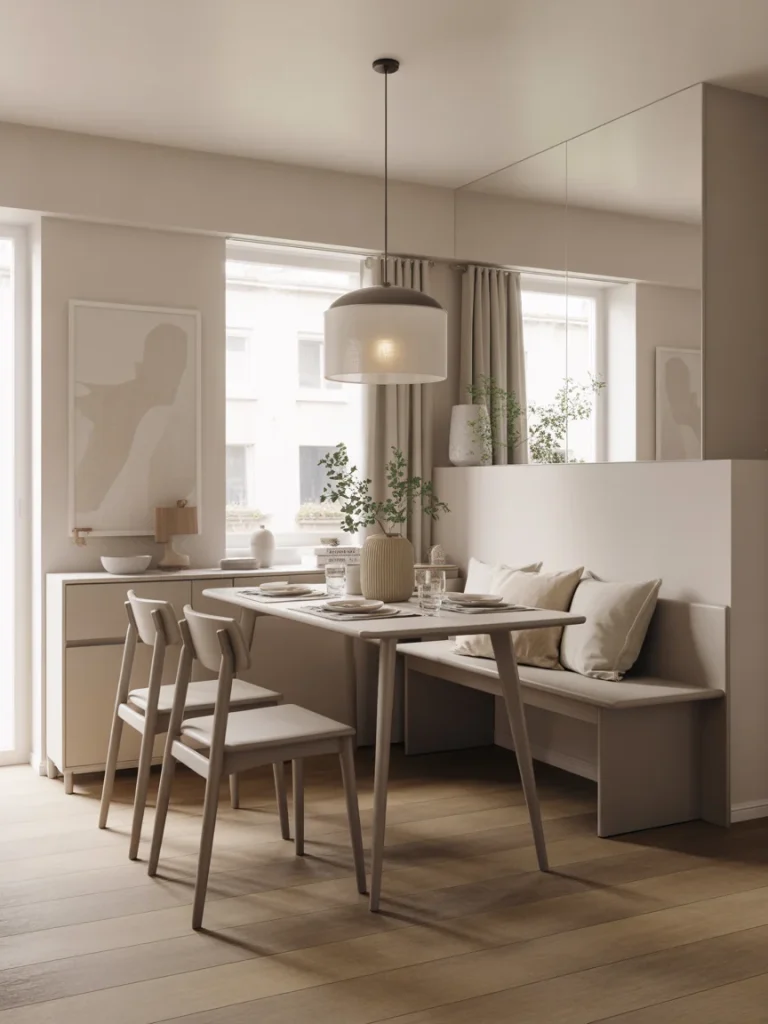
Below, you’ll find smart furniture swaps, storage moves, lighting tricks, and visual design tips that open up a room instantly. Save your favorites, then start mixing and matching to build a dining spot you’ll love to gather in.
1. Choose a Round Table
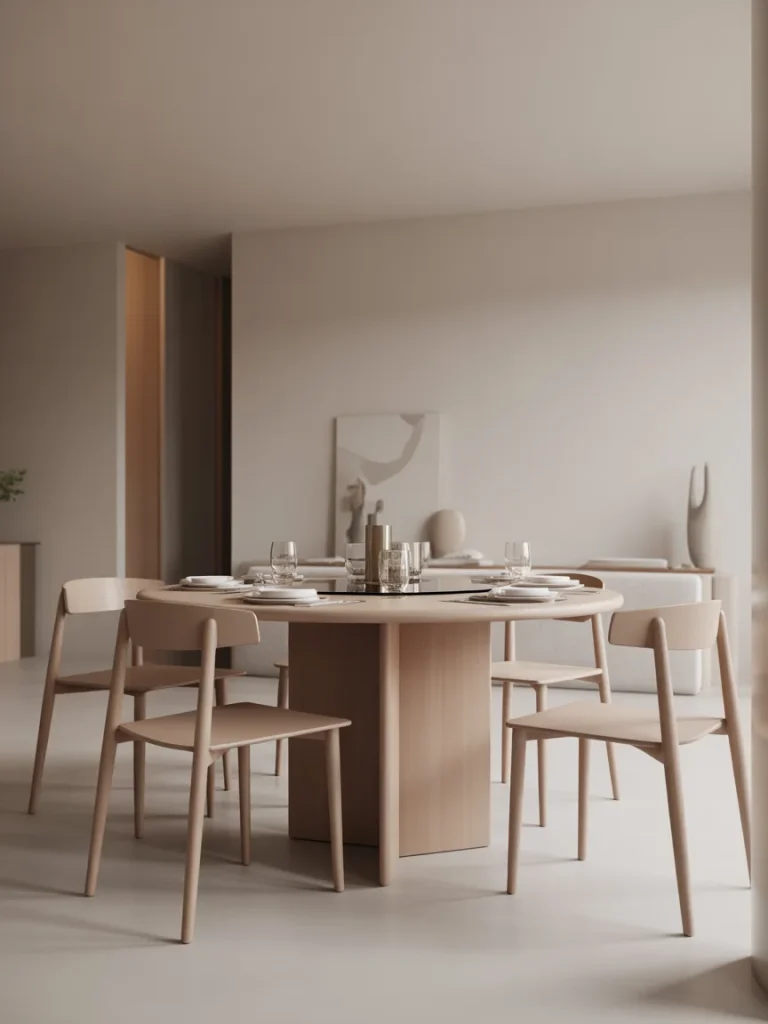
Hard corners steal precious inches in a small room. A round or oval table keeps sightlines soft and pathways clear, so chairs slide out easily and people can move around without bumping elbows. A pedestal base also frees legroom.
- Best sizes: 36–42 inches round for four people; up to 48 inches if you have the clearance.
- Allow 24–30 inches of space from the table edge to the nearest wall or furniture.
- Choose a light wood, white, or glass top to visually lighten the footprint.
Pro tip: In a narrow space, an oval table aligns with the room’s length and still rounds off harsh edges.
2. Build a Space-Saving Banquette
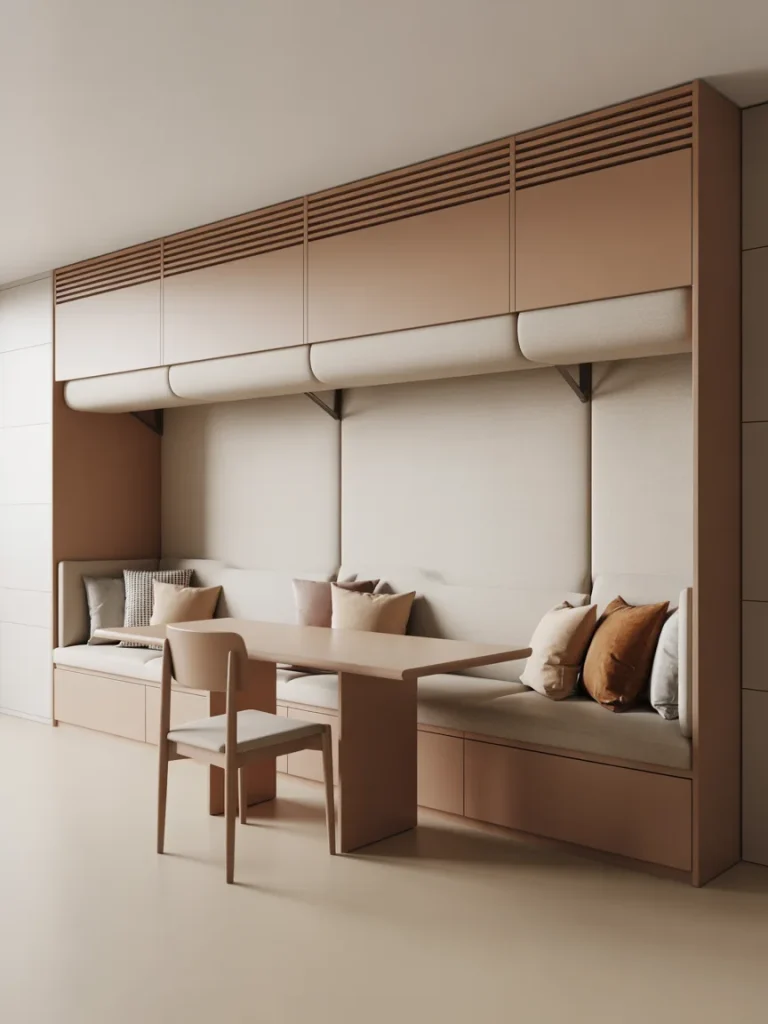
A built-in bench (banquette) hugs the wall and eliminates the need for a walkway behind chairs, so you gain seating without growing the room. Hinged seats or drawer bases secretly store table linens, seasonal decor, or board games.
- Bench depth: 18–20 inches; seat height: about 18 inches.
- Use wipeable performance fabric or faux leather for easy cleanup.
- Top with plush cushions and layered pillows to soften corners and add coziness.
Leaning more casual-or-cozy? Explore breakfast-nook inspiration to fine-tune your layout and seating. For more small-space seating inspo, browse our modern breakfast nook ideas.
3. Go Vertical
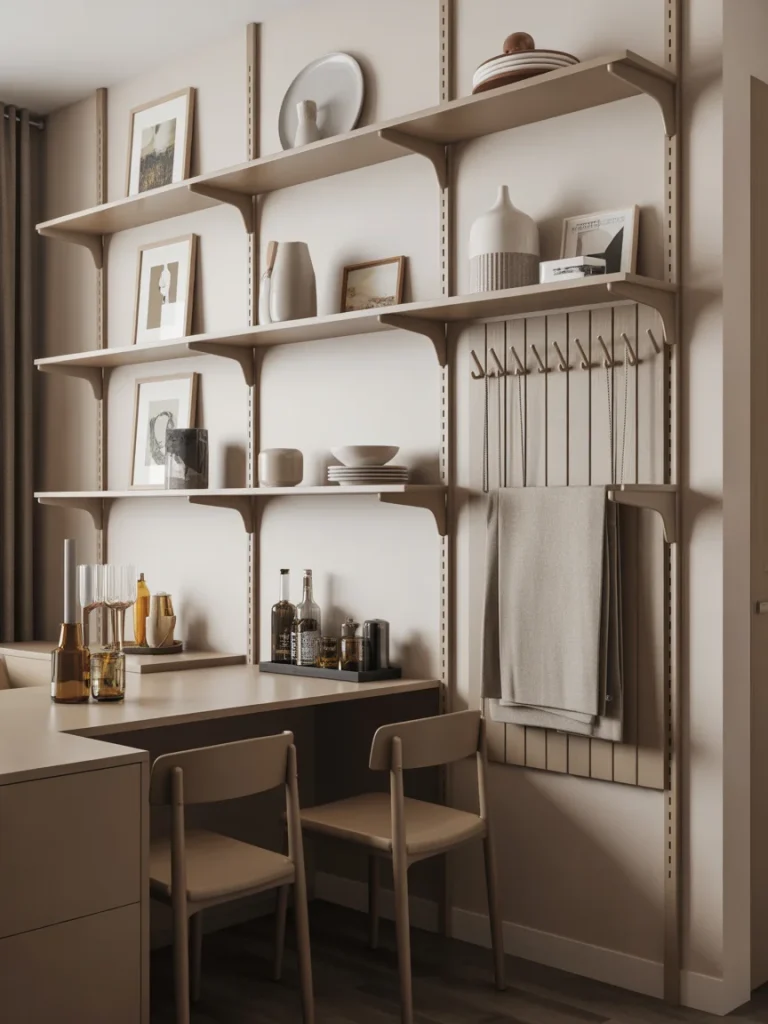
When floor space is tight, put your walls to work. A shallow ledge shelf or plate rail displays art, platters, and vases without crowding the table. A simple shaker-style peg rail holds extra chairs, napkins, or a to-go bag for quick weeknight dinners.
- Keep shelves 4–6 inches deep to avoid overhangs into your dining zone.
- Mount a low-profile cabinet to corral barware, candles, or special-occasion serveware.
- Repeat finishes (wood tone, matte black, brass) to make storage feel intentional.
4. Use Light Colors, Mirrors, and Sheen
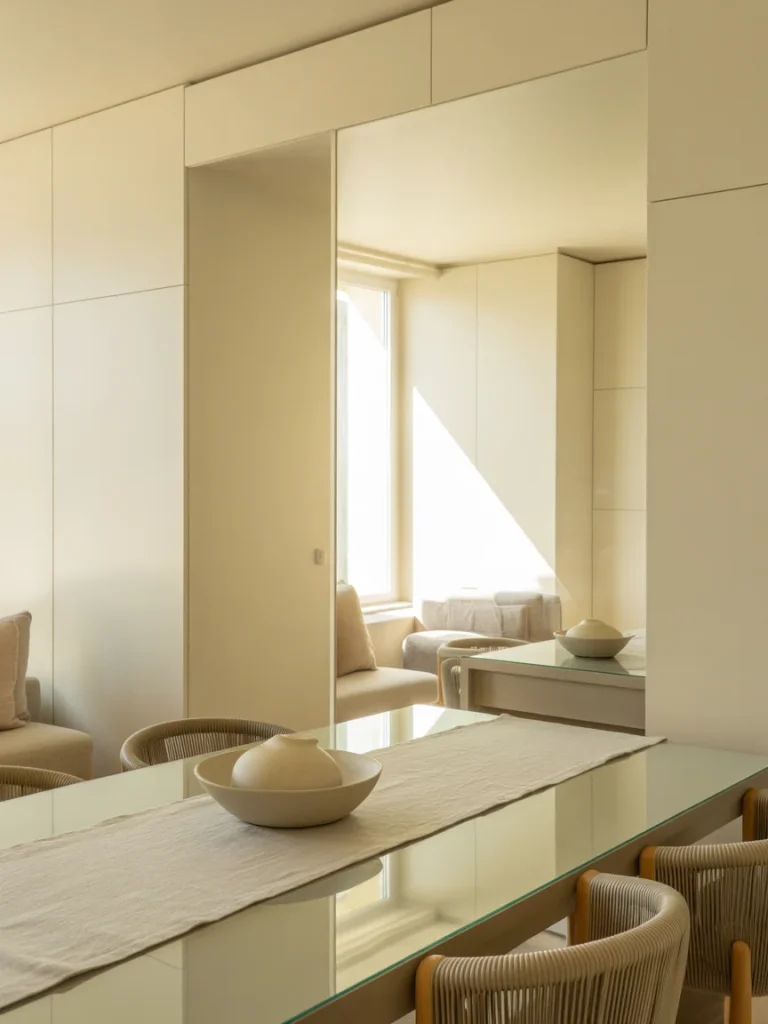
Pale walls and reflective finishes trick the eye into perceiving more space. Choose paint with a high LRV (Light Reflectance Value)—think soft white, warm cream, or barely-there greige. Mirrors opposite a window double the daylight and view, while semi-gloss trim, satin metals, and glass add gentle shine.
- Place a mirror to reflect natural light or your prettiest vignette—never clutter.
- Layer textures (linen runner, woven chairs, ceramic centerpiece) to keep neutrals lively.
- Limit your palette to 2–3 calm tones with one accent for cohesion.
Want a grounded, nature-forward palette that still feels airy? Get inspired by these soothing palettes in our earthy dining room ideas.
5. Layer Your Lighting
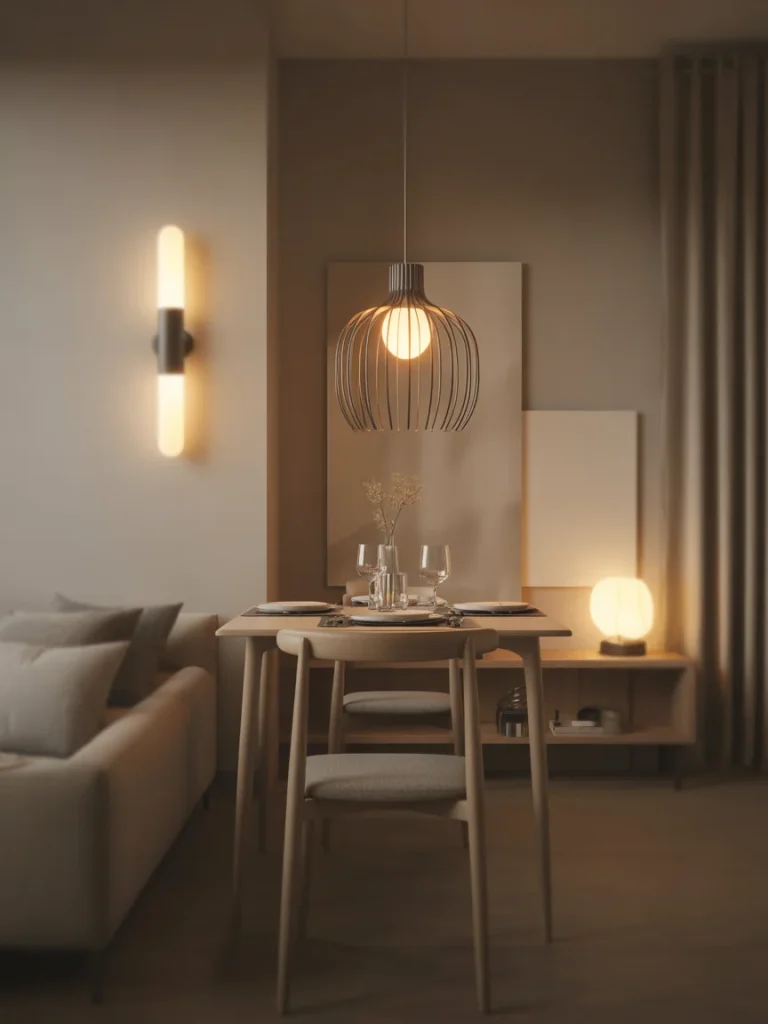
Single overhead lights can feel flat—especially at night in small rooms. A layered scheme lets you set the mood for meals, homework, or board-game night. Combine a central pendant with dimmable sconces or a petite table lamp on a console.
- Hang the pendant 30–34 inches above the tabletop (or slightly higher for larger tables).
- Smaller room? Choose an airy, open-frame or glass pendant to avoid visual bulk.
- Install dimmers for instant ambiance and glare control.
6. Pick Transforming Furniture
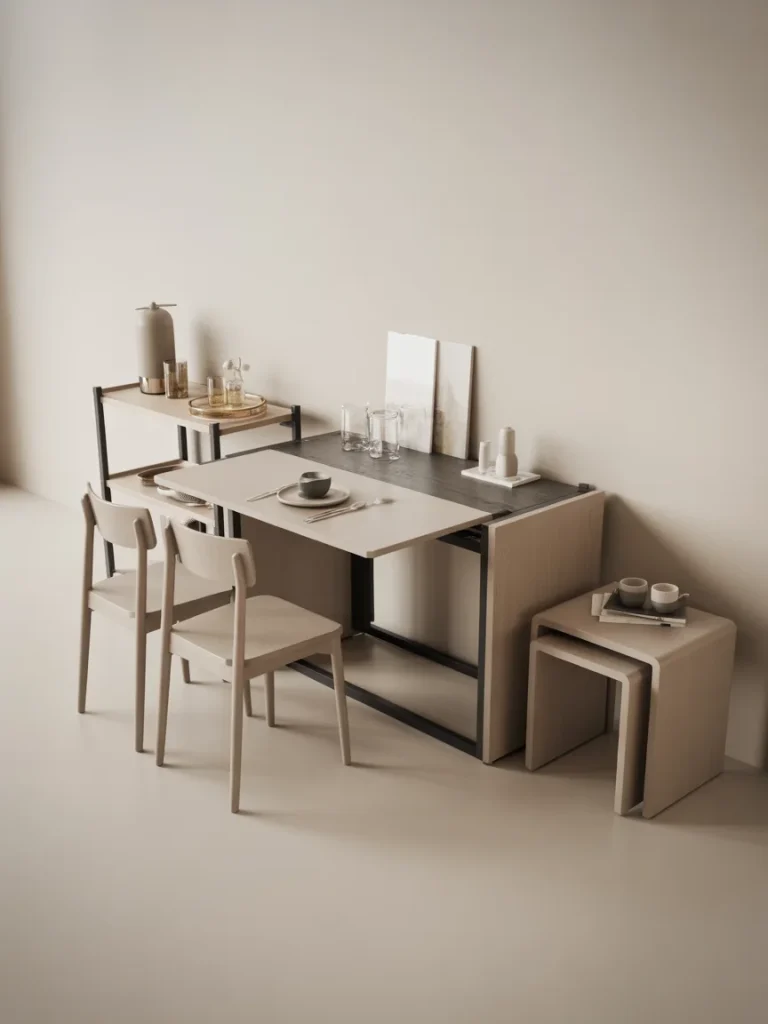
Make your furniture flex with your life. A drop-leaf table tucks against the wall for weekday breakfasts, then expands for guests. Extendable tables are great for small spaces that occasionally need to seat six. Stackable or folding chairs store on a peg rail when not in use.
- Choose chairs under 18 inches wide to fit more settings around a compact table.
- Keep a slim rolling cart to supply extra surface area for serving or bar duty.
- Look for nesting side tables to act as spillover surfaces during gatherings.
7. Define the Zone with the Right Rug and Layout
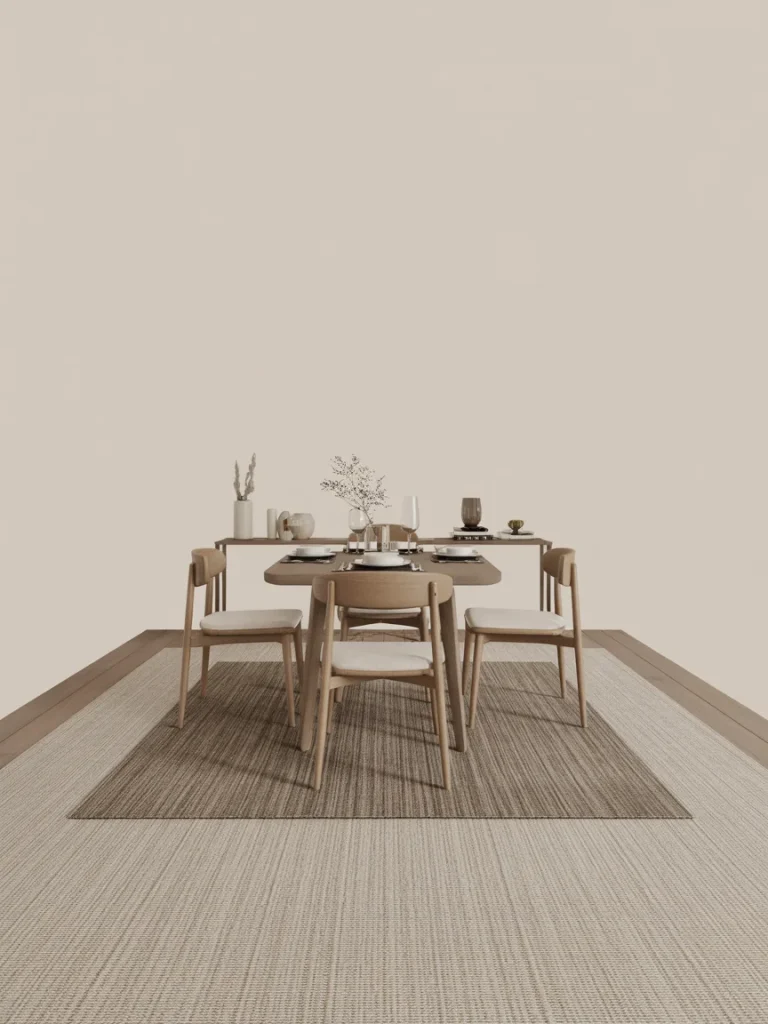
A well-sized rug frames your dining spot and visually “claims” the area in open-concept rooms. It also dampens sound—a big win in echo-prone, hard-surface spaces. Choose a low-pile, easy-clean material like indoor/outdoor or performance fibers.
- Rug size guide: Add 24 inches on all sides of the table so chairs stay fully on the rug when pulled out. For a 36–48 inch table, a 6×9 often works; square rooms love round rugs.
- Leave a 12–18 inch floor border around the rug for breathing room.
- Float a narrow console or wall-mounted shelf to hold serveware without cramping the layout.
If you love a cozy-meets-contemporary vibe, experiment with texture and tone from our modern rustic dining room guide.
8. Favor Clear, Leggy, and Slim-Profile Pieces
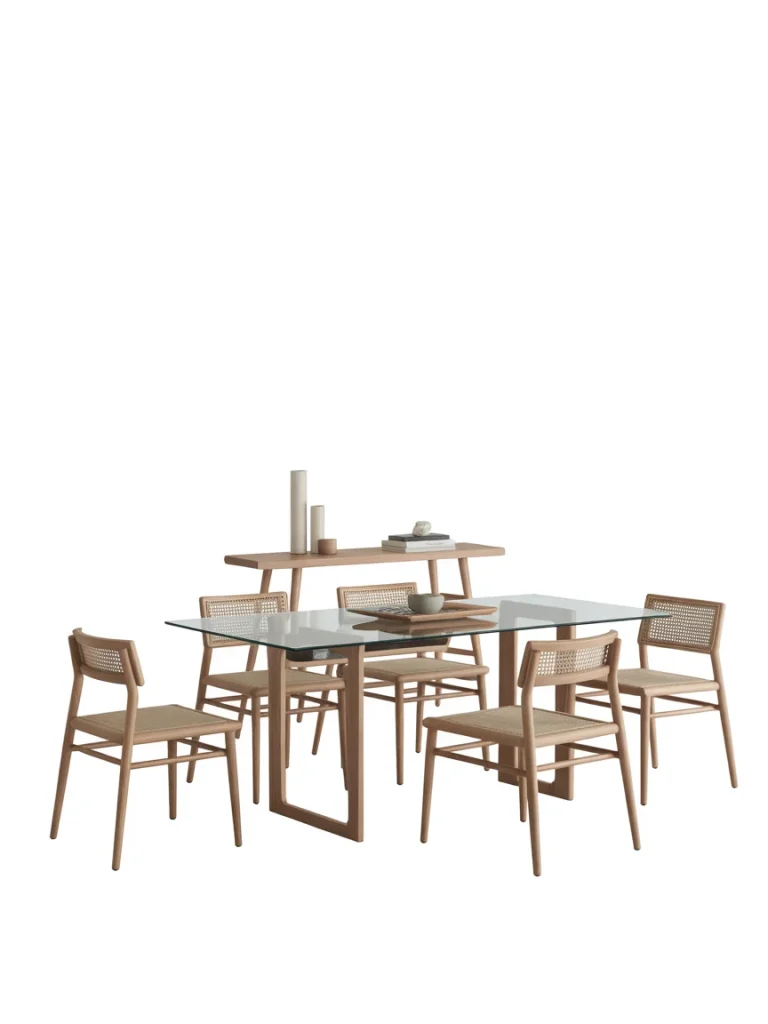
Visual weight matters. See-through or slender furniture occupies less “space” to the eye. Try a glass-topped table, acrylic chairs, or open-base pieces that keep the floor visible. Slim metal-framed chairs and console tables maintain an airy look without skimping on function.
- Pick chairs with open backs or cane for a light, breezy feel.
- Match wood tones between chairs, table, and shelves to create a seamless line.
- Keep centerpieces low and compact so the table still feels spacious day to day.
Love layers and personality in petite spaces? Steal styling cues from our modern boho dining room ideas.
9. Make the Ceiling Feel Taller
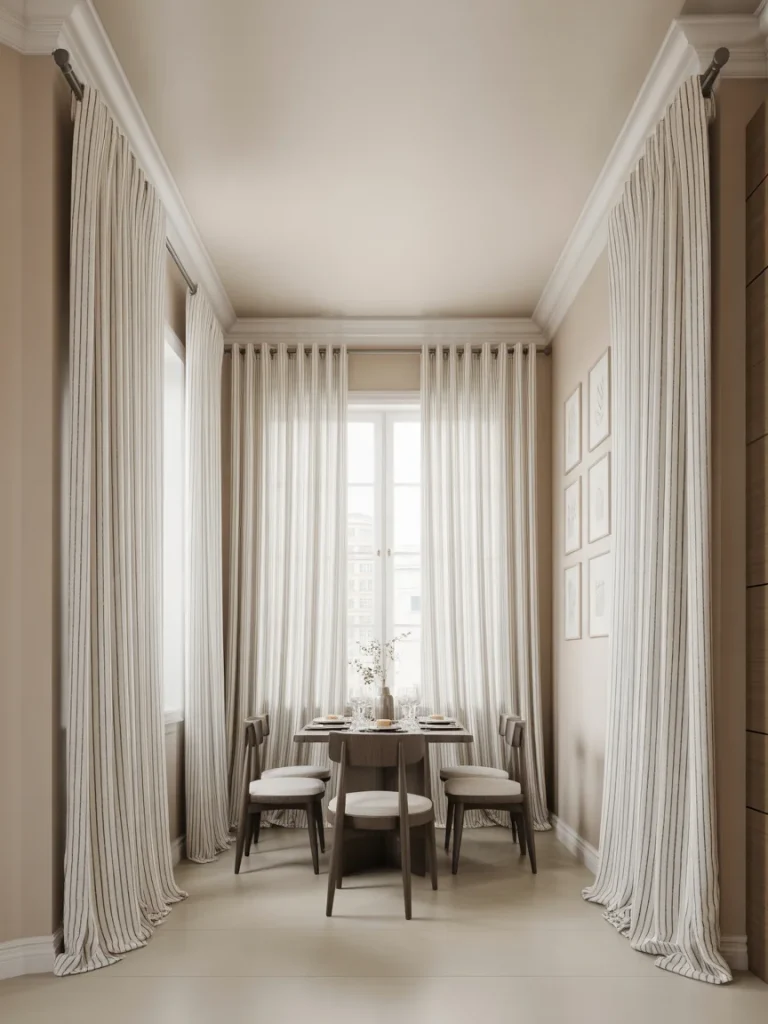
Height helps a small room breathe. Hang curtains at the ceiling line (or 4–6 inches above the window) and extend the rod 8–12 inches past the window frame. This “lifts” the room and lets more light in when panels are open. Choose light-filtering fabrics that puddle slightly or skim the floor for a tailored finish.
- Vertical stripes or narrow pleats draw the eye up.
- Install crown molding or a crisp ceiling paint to sharpen edges and add polish.
- Keep art low-profile and in a tidy grid to avoid visual clutter.
10. Design for Double Duty
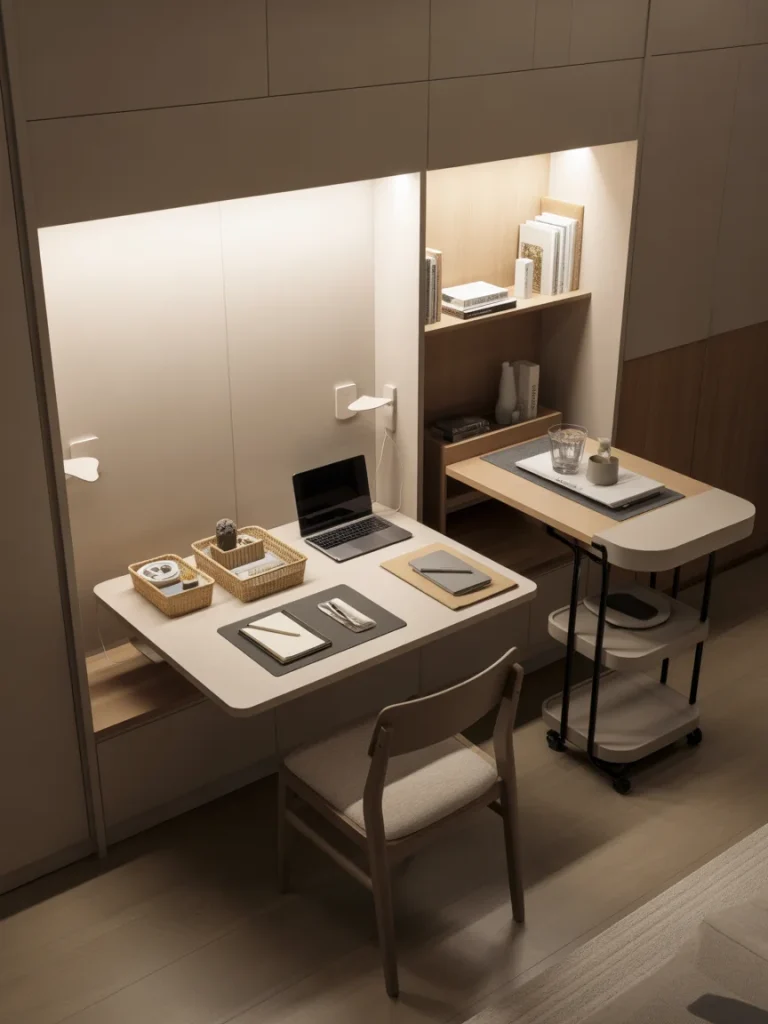
In small homes, your dining spot often fills multiple roles. Plan for it. A sleek secretary desk, a fold-down wall table, or a lidded storage bench can switch the room from work mode to dinner-ready in minutes. Corral work supplies in lidded baskets, and stash laptops in a tray you can whisk away when it’s mealtime.
- Use a rolling cart as a portable office or craft station that tucks into a closet.
- Choose dimmable, warm lighting for evening meals and brighter task lighting for daytime work.
- Label storage inside the banquette so cleanup is fast and friction-free.
FAQs
What size rug works under a small dining table?
Measure your tabletop and add 24 inches on each side. This ensures chair legs stay fully on the rug when pulled out. For a 36–48 inch round or square table, a 6×9 is a reliable starting point; consider a 7′ round for circular tables in square rooms.
What’s the best table shape for a narrow dining room?
Oval or narrow rectangular tables typically suit long, tight spaces best. If your room skews compact all around, choose a round table with a pedestal base to keep circulation effortless.
How high should I hang a pendant over a small dining table?
Start at 30–34 inches above the tabletop, adjusting a bit higher for larger tables or if the fixture is visually heavy. When in doubt, dimmable bulbs help you fine-tune ambiance without lowering the fixture.
How can I make a small dining room feel bigger without renovations?
Lighten your palette, add a mirror opposite a window, choose slim or see-through furniture, and keep surfaces tidy. Hang curtains high and wide to boost perceived height and daylight, and layer a low-pile rug to define the zone without bulk.
How do I seat more guests occasionally?
Use an extendable or drop-leaf table and keep two stackable or folding chairs on a peg rail or in a nearby closet. A bench can squeeze in an extra diner or two in a pinch, and a rolling cart can act as a serving station to free up table space.
Conclusion
Small dining rooms can be mighty—when every detail works smarter. Start with scale-savvy furniture, layer in flexible lighting, and finish with airy colors and textures that feel warm, not crowded. Save this guide to your decor board, share it with a friend who’s short on square footage, and start decorating your small dining room with confidence today.