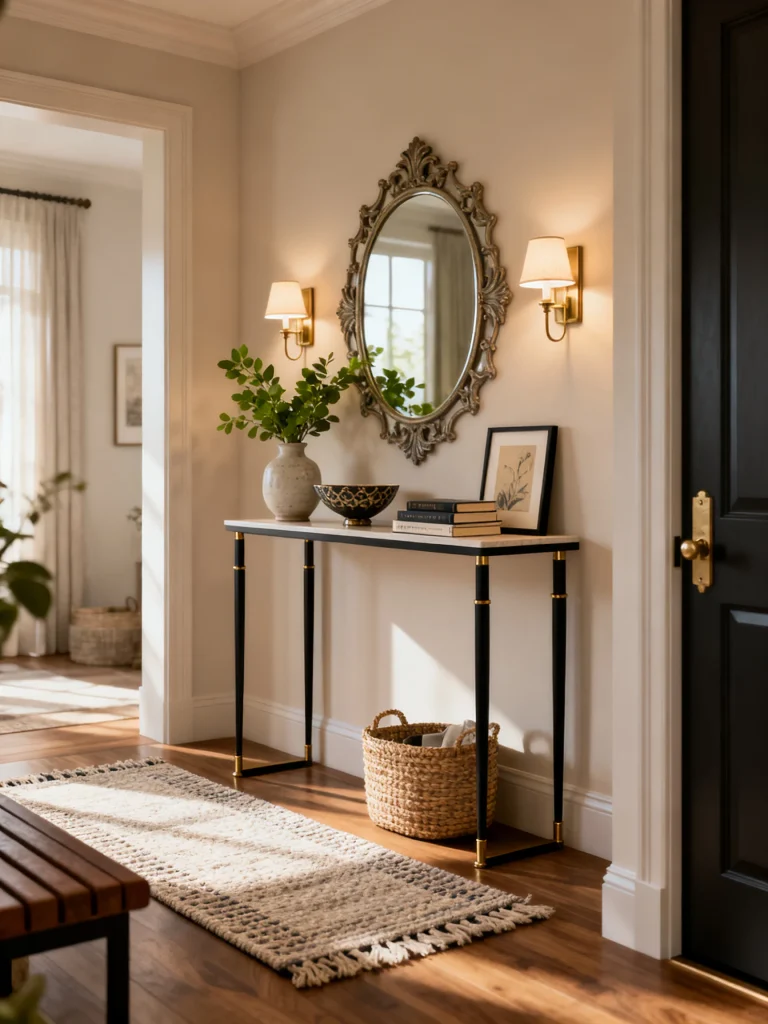
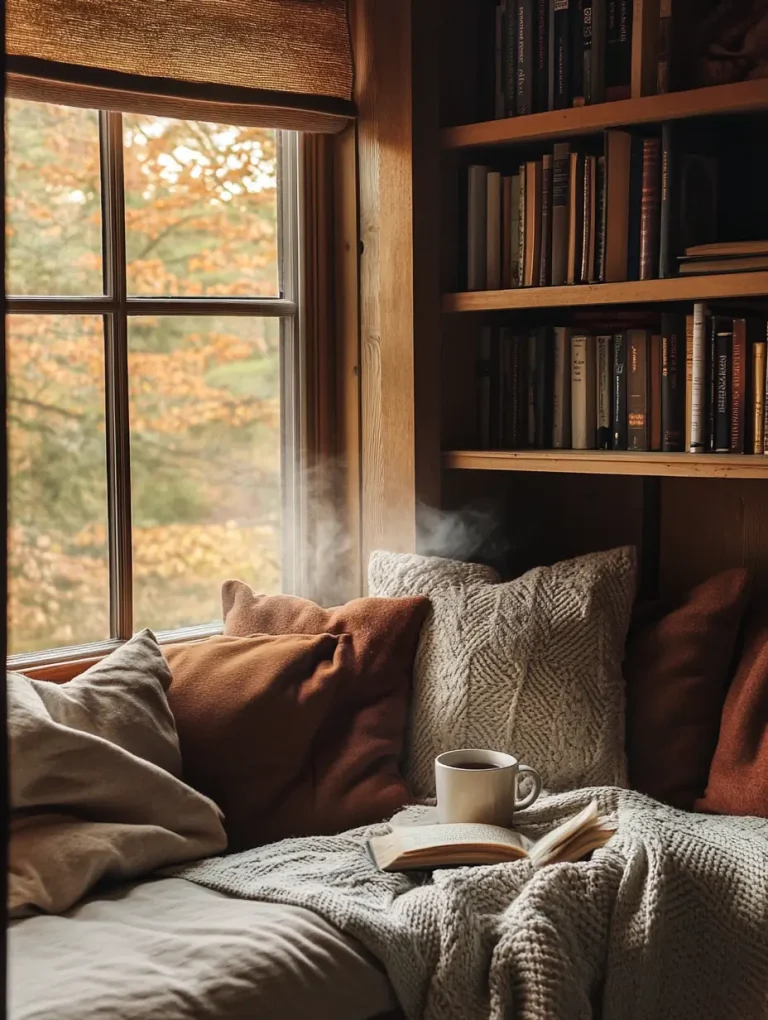
If your bedroom is short on square footage, you don’t have to compromise on comfort or style. With the right small bedroom ideas, you can create a space that feels open, organized, and deeply relaxing. Below, you’ll find practical, budget-friendly tips that focus on smart layouts, hardworking furniture, and designer tricks to visually expand your room—without a major renovation.
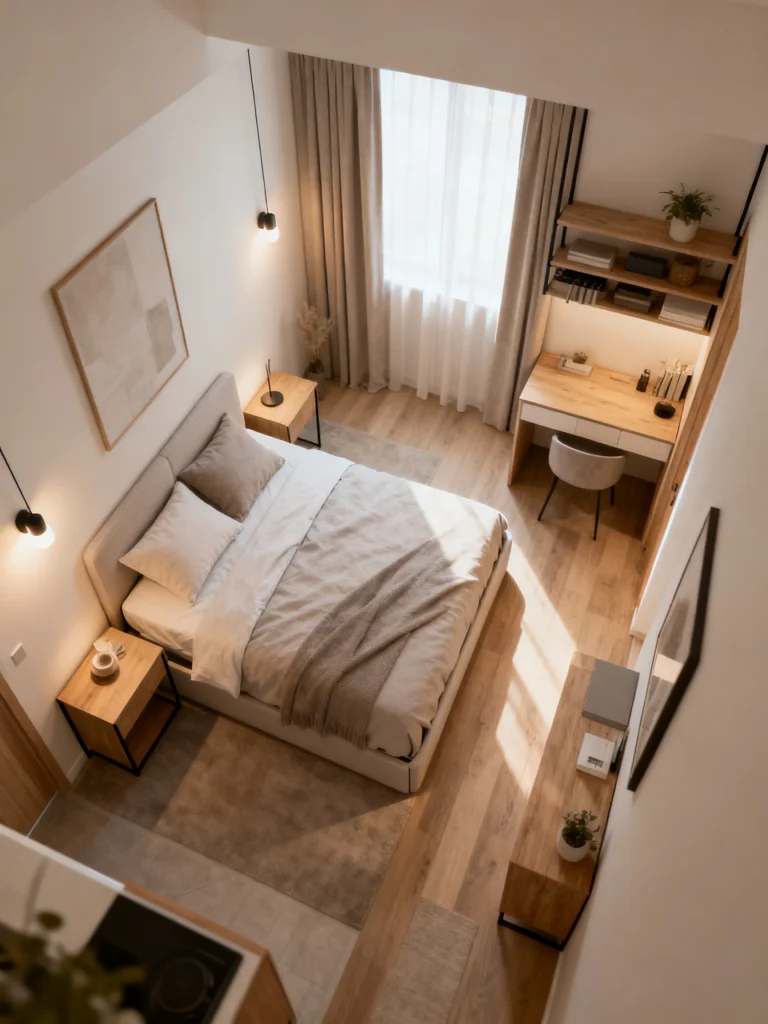
1. Start With a Mini Floor Plan
Before you move a single piece of furniture, sketch a scaled plan of your bedroom. Measure the length, width, ceiling height, and note where doors, windows, radiators, and outlets live. Try a few layouts on paper (or with a simple room planner app) to test traffic flow and sightlines. Often, a small shift—like centering the bed on the longest wall or floating it off the wall to allow both sides access—can unlock extra storage and make the room feel bigger.
- Leave at least 24–30 inches of walking clearance around the bed where possible.
- Align the bed so you’re not opening the door directly onto it, if layout allows.
- Plan where lighting, mirrors, and rugs will go right from the start.
2. Pick a Bed That Does More Than Sleep
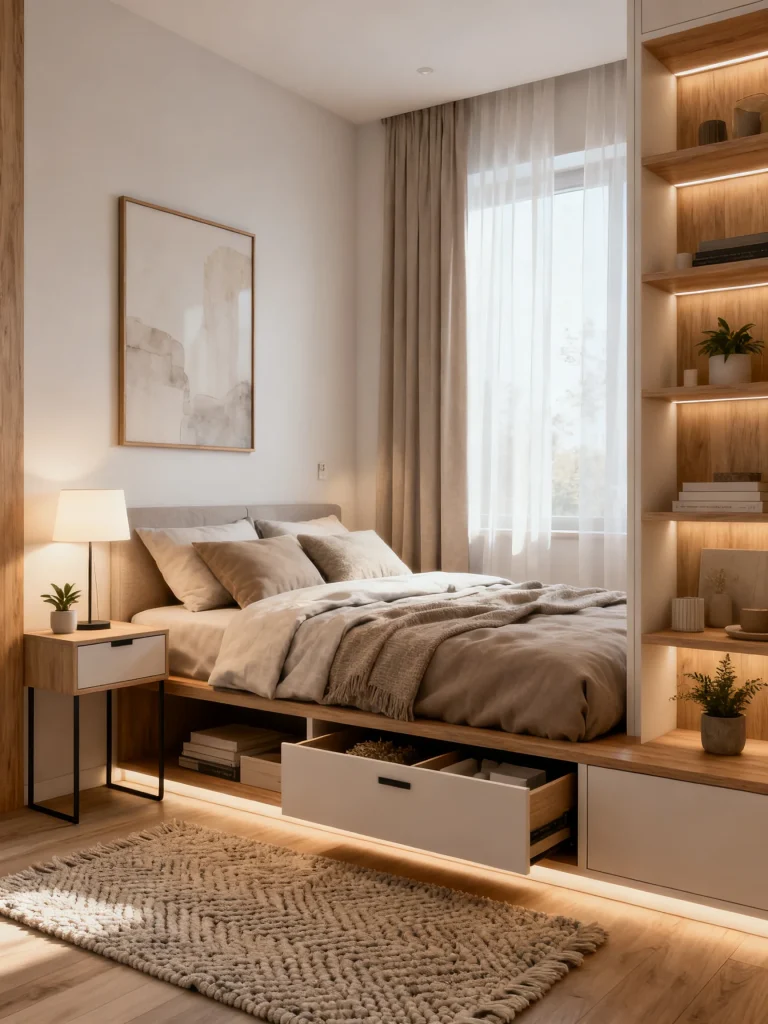
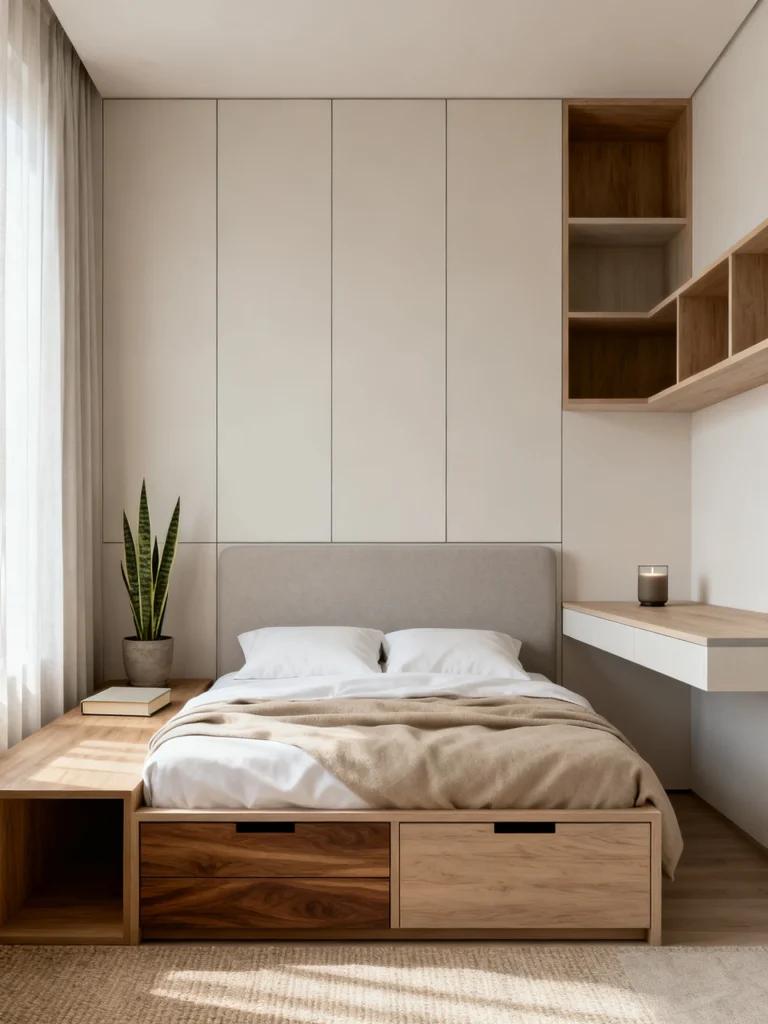
In a tight room, your bed should earn its keep. Consider a storage bed with deep drawers, a lift-up ottoman bed, a Murphy bed, or a daybed that slides against a wall to free up floor space. A narrow headboard with built-in shelves replaces nightstands altogether. When choosing, pay attention to leg style: beds raised on legs reveal more floor and feel lighter, while storage bases add function but can feel boxier—balance based on your needs.
- Daybeds or trundles are perfect for multipurpose rooms and guests.
- Choose a slim, breathable frame; avoid oversized footboards in small rooms.
- Match bedding to your wall color for a serene, expanded look.
Need inspiration? Browse graceful, space-savvy daybed ideas to see how one piece can shift from lounge to sleep mode.
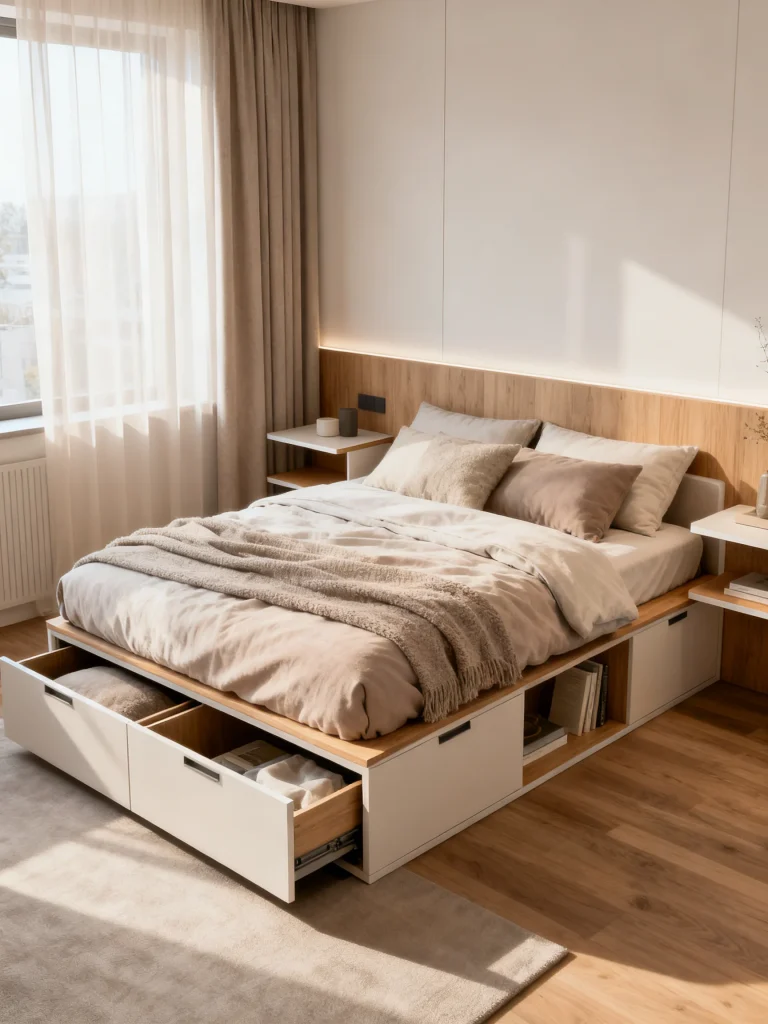
3. Build Storage Into the Room
When there isn’t space for another dresser, build one in. Floor-to-ceiling wardrobes, shallow wall niches, or low built-ins under a window keep clutter out of sight while adding a custom look. Consider a narrow built-in along the bed wall with a recess for the headboard and sconces—an elegant, hotel-style solution that adds storage without crowding the floor.
- Use doors with integrated mirrors to reflect light and double function.
- Opt for push-to-open fronts to skip bulky hardware.
- Match built-in color to walls for a seamless, airy feel.
For seamless, space-saving cabinetry, explore these smart built-in dresser ideas.
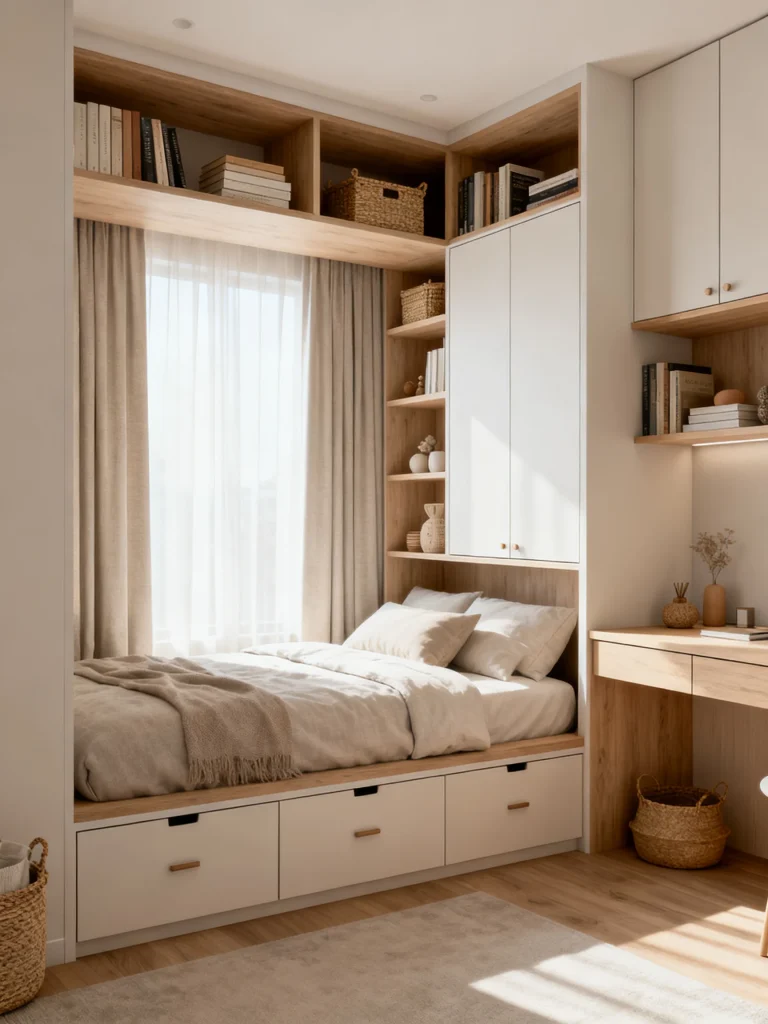
4. Go Vertical With Shelves and Hooks
When floor space is precious, climb the walls. Install shelves above doors, run a picture ledge behind the bed, and use slim wall hooks or peg rails for bags, robes, and hats. A tall bookcase, styled lightly, draws the eye up and makes the room feel taller. Keep displays minimal: stack storage boxes, use baskets, and leave breathing room between objects to avoid visual clutter.
- Mount floating nightstands or corner shelves to free floor area.
- Add under-shelf LED strips for warm, indirect light.
- Group like items by color and material to simplify the look.
Want more vertical storage inspiration? Steal smart layouts from our bedroom shelf ideas roundup.
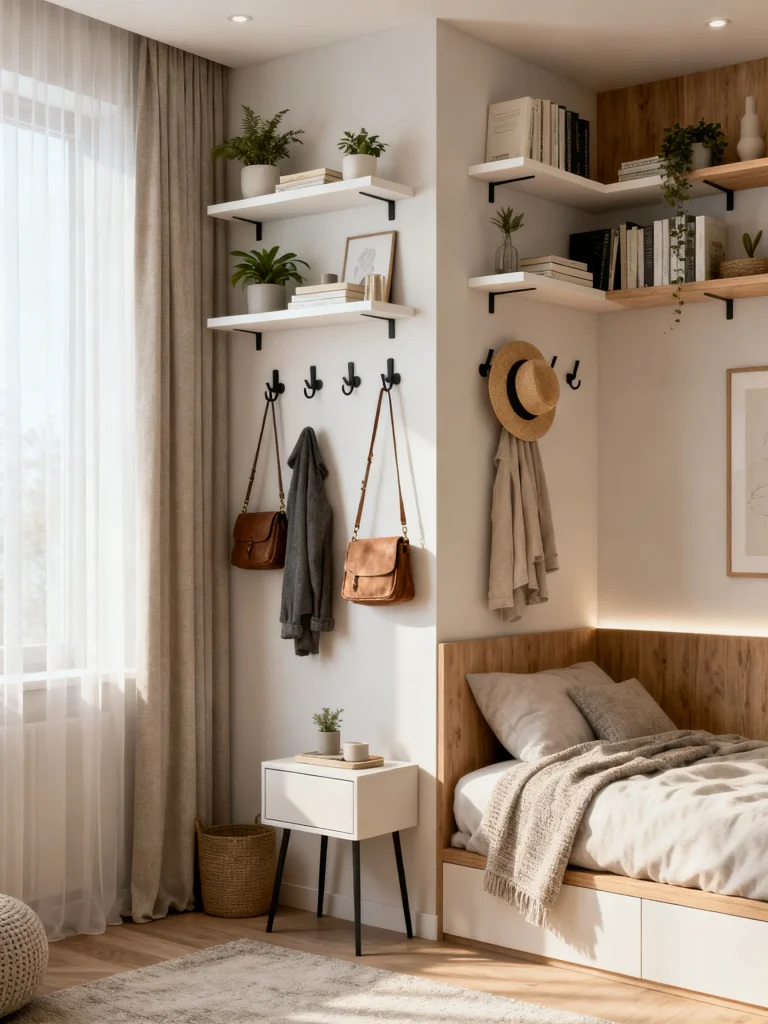
5. Use a Light, Tone-on-Tone Color Palette
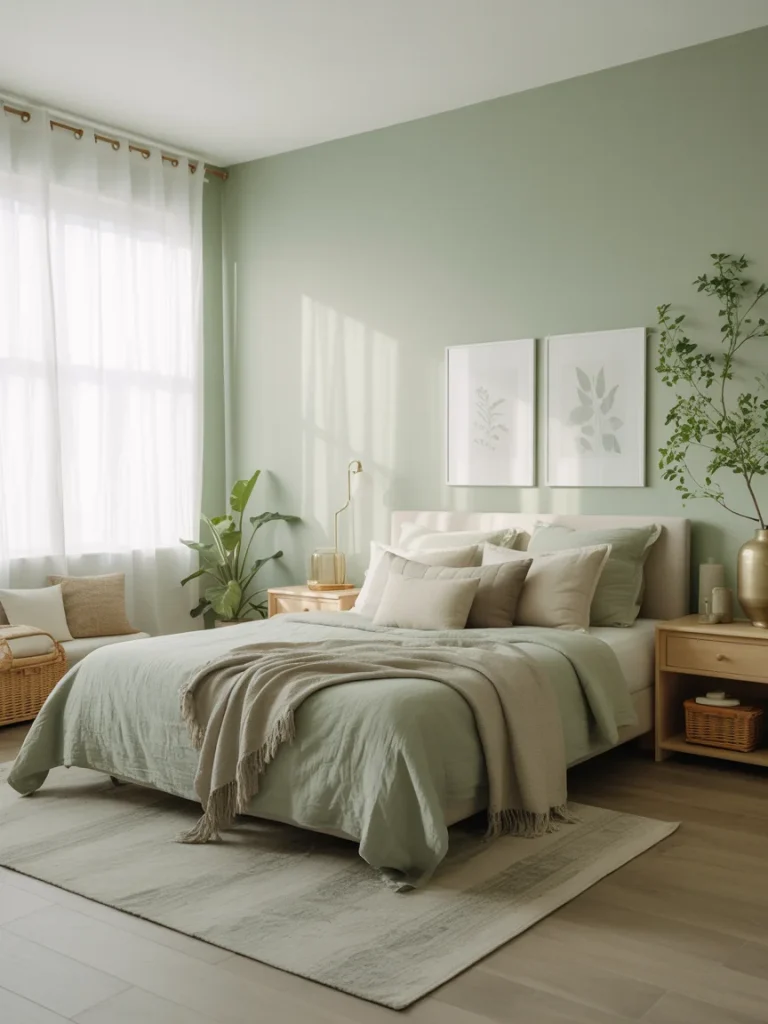
Soft, low-contrast color schemes make small rooms read as bigger. Think warm whites, pale greiges, dusty sages, or light taupes layered tone-on-tone across walls, bedding, and curtains. Keep dark accents slim and strategic (a black-framed mirror or a slender lamp) for definition without heaviness. If you crave color, choose one calming hue and repeat it in varying tints for harmony.
- Paint walls, trim, and doors the same light color to erase visual breaks.
- Choose matte or eggshell finishes to minimize glare on imperfect walls.
- Echo wall color in bedding for a cocooning, seamless effect.
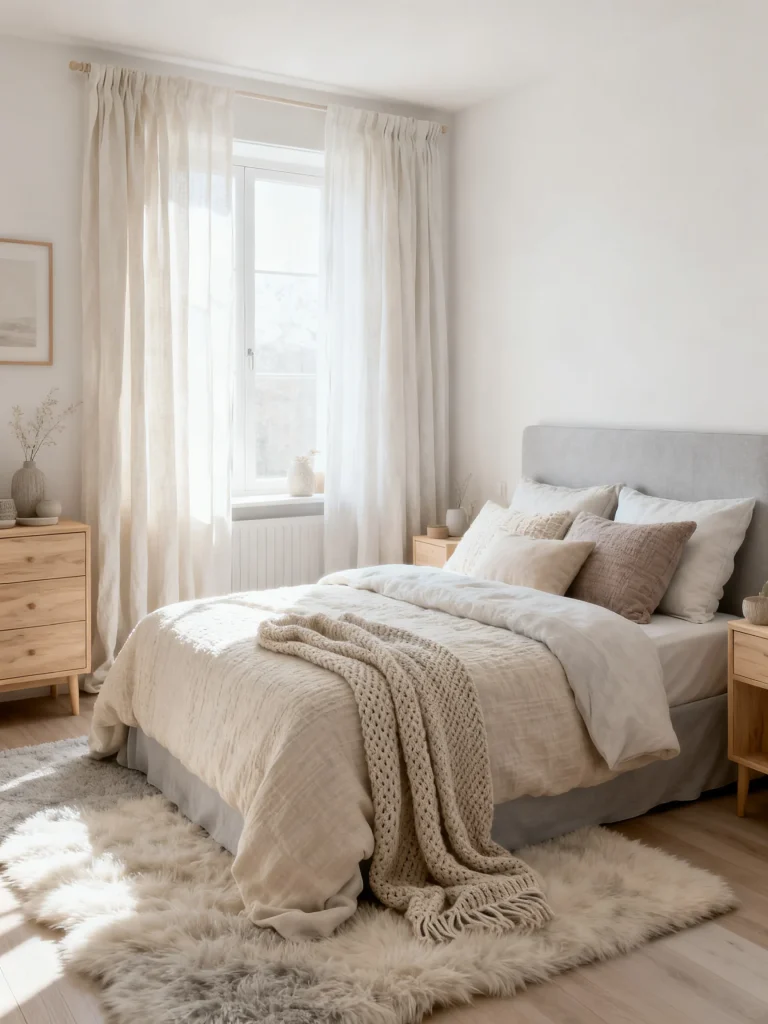
6. Double Your Light With Mirrors and Shine
Mirrors are classic small bedroom ideas for a reason—they bounce light and visually double your square footage. Place a large mirror opposite or adjacent to a window to amplify natural light. Consider mirrored wardrobe doors, a slim mirrored nightstand, or glass lamp bases. Glossy picture frames and metallic accents can also lift the mood without overwhelming the palette.
- A single oversized mirror feels lighter than several small pieces.
- Leaning mirrors add height but secure them to the wall for safety.
- Use reflective trays to corral small items on the dresser.
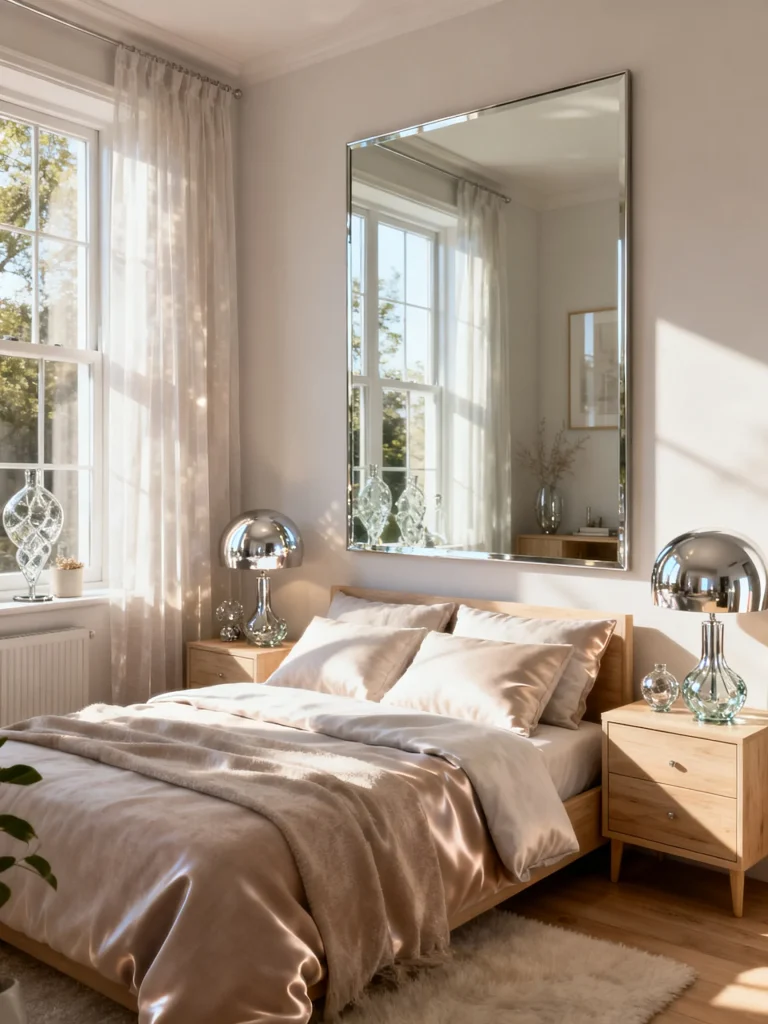
7. Layer Lighting to Free Surfaces
Skip bulky table lamps. Wall sconces, pendant lights, and under-shelf LEDs save surface area and spread light evenly. Aim for three layers: ambient (ceiling fixture), task (sconces or swing-arm lamps for reading), and accent (LED strips or a small spotlight for art). Dimmer switches and warm bulbs (2700–3000K) create a cozy, relaxing bedroom feel.
- Hardwire sconces for a clean look; plug-in models are renter-friendly.
- Run cords neatly in cord covers color-matched to the wall.
- Choose compact, off-the-wall shades to avoid bumping into fixtures.
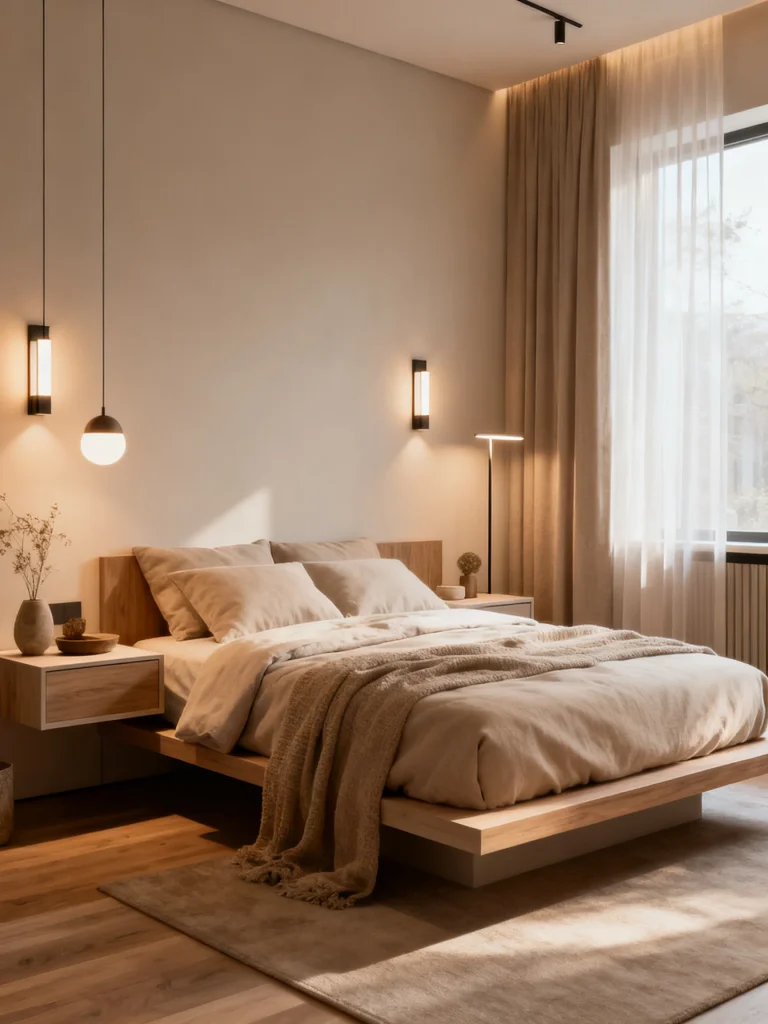
8. Think Light but Cozy With Textiles
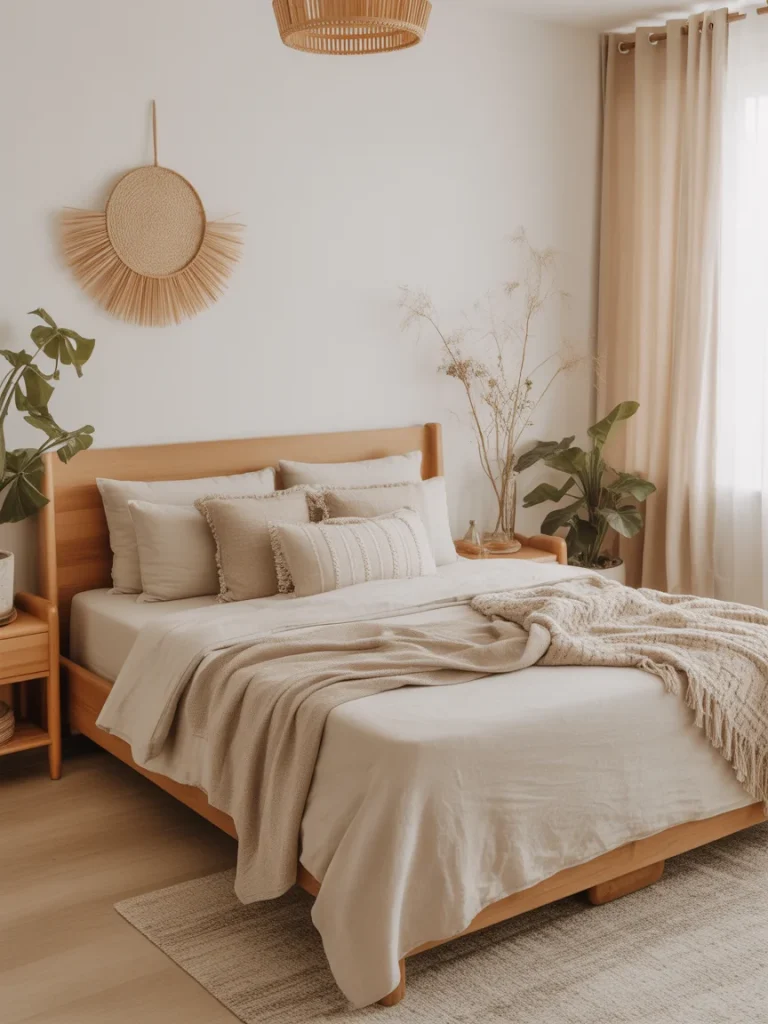
Use textiles to define zones, soften acoustics, and add comfort—without crowding the room. Hang curtains high and wide to make windows feel larger. Choose a single, generously sized rug that sits under the bed and extends on both sides; small scatter rugs can chop up the floor visually. Keep patterns scaled down, and repeat a few textures (linen, bouclé, smooth cotton) to avoid a busy look.
- Pick bedding with a subtle pattern or a solid that matches your wall color.
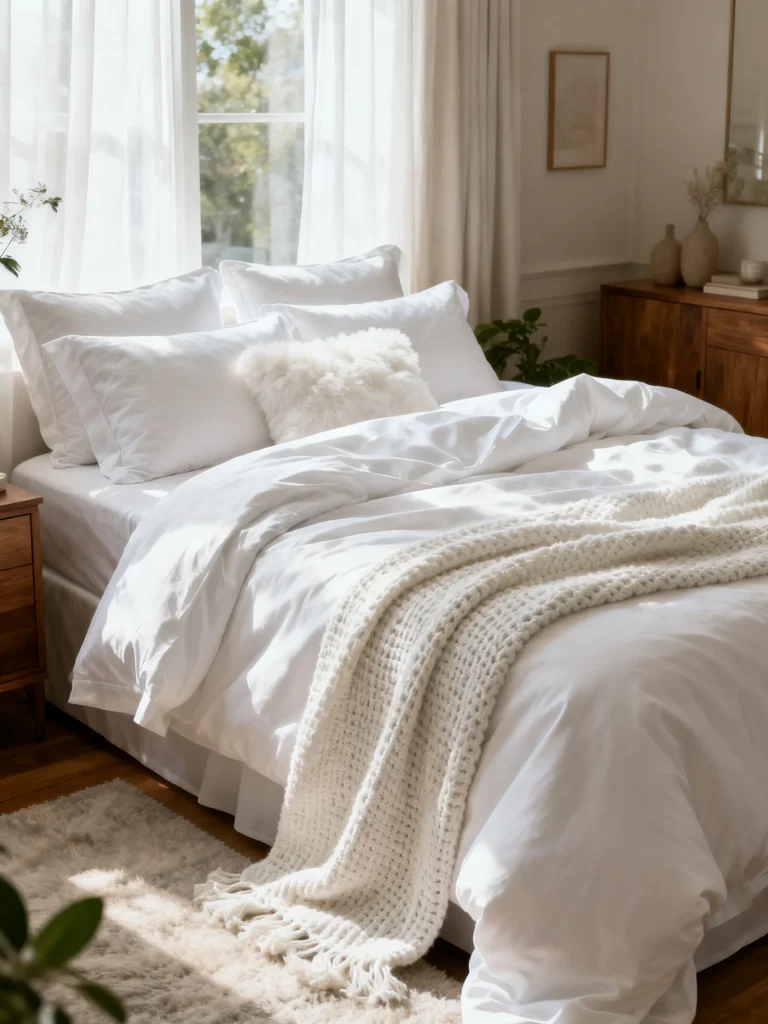
- Layer a light quilt with a throw instead of a bulky comforter.
- Use a bed skirt or tailored panel to hide under-bed storage cleanly.
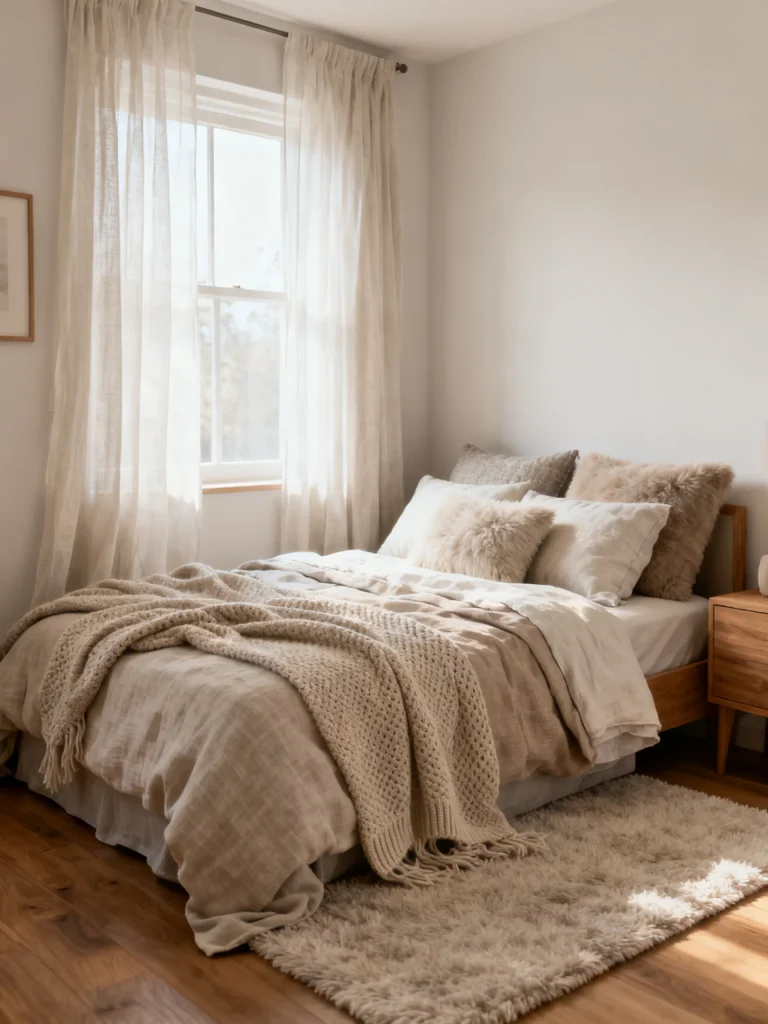
9. Carve Out One Small “Moment”
Even the tiniest room benefits from a micro-zone: a reading perch, a small vanity shelf with a mirror, or a floating desk. This single “moment” adds personality and purpose without demanding much space. Think a petite chair plus a floor lamp in a corner, or a wall-mounted shelf paired with a slim stool that tucks away when not in use.
- Choose multiuse pieces: a vanity shelf that doubles as a laptop perch.
- Use a floor lamp with a narrow base to conserve floor area.
- Style lightly—a candle, a bowl, and one framed print is plenty.
For cozy, compact nooks, explore our practical bedroom reading corner tips and layouts.
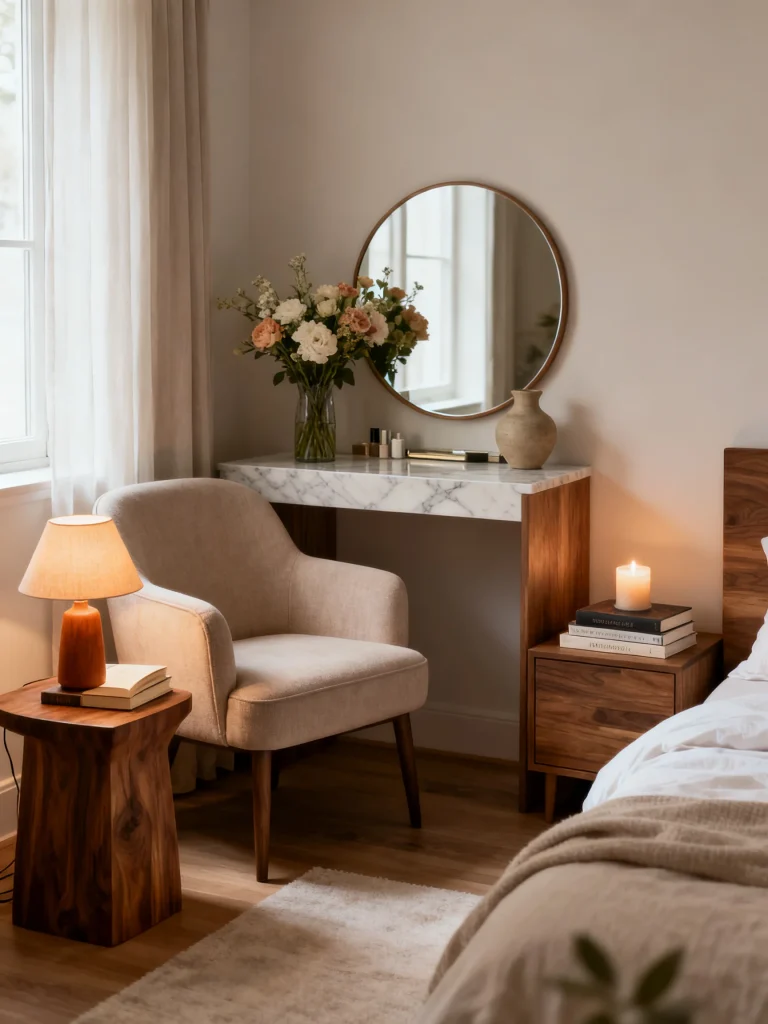
10. Edit Ruthlessly and Hide the Rest
Clutter is the biggest space-stealer of all. Keep what you truly use and love, and hide the rest in attractive containers. Opt for lidded boxes on shelves, covered baskets under benches, and drawer organizers that make every inch count. Limit decor to a few meaningful pieces and rotate seasonally to keep the room fresh without adding visual noise.
- Adopt a one-in, one-out rule for clothes and decor.
- Use velvet or slim flocked hangers to save closet space.
- Corral daily essentials in a tray to keep surfaces tidy.
Bonus Quick Wins
- Swap swing doors for pocket or sliding options to save clearance.
- Mount a full-length mirror on the inside of a closet door.
- Use clear bins under the bed and label everything.
- Choose low-profile radiators or cover them with a custom shelf.
FAQs
Choose the smallest bed that still feels comfortable for you. A full-size often fits where a queen feels cramped. If you must have a queen, select a slim frame without a bulky footboard and consider a storage base so it does double duty.
Light, low-contrast palettes—warm whites, soft greige, pale sage, or dusty blush—expand the room visually. Painting trim and doors to match the wall color reduces visual breaks, which also makes the space read larger.
Place a large mirror opposite or beside a window to reflect natural light. Mirrored wardrobe doors or a tall leaning mirror (secured to the wall) add height and brightness without adding clutter.
Pick the biggest rug your layout allows and slide it under the front two-thirds of the bed, leaving at least 18–24 inches on each side. A single large rug visually unifies the floor and makes the room appear larger than several small mats.
Try wall-mounted shelves, a narrow console behind the bed, a headboard with cubbies, or even a windowsill extension. Pair with wall sconces or a pendant to free up valuable surface space.
Your Small Bedroom, Styled Big
Small bedrooms reward thoughtfulness. Start with a smart layout, choose multipurpose furniture, keep the palette calm, and edit as you go. When every inch works hard, even a tiny room can feel like a restful retreat. If these small bedroom ideas inspired you, save this post for later, share it with a friend who’s decorating, and pick one tip to try this weekend—you’ll feel the difference fast.