Designing a compact living room that still feels cozy, stylish, and TV-ready is totally doable with a few smart moves. These small TV living room ideas will help you save space, streamline cords, and keep the room looking beautiful even when the screen is off. From wall-mount tricks to flexible seating and clever storage, here are 10 designer-approved ways to make a small media space shine. For more ways to style your screen, explore our modern TV wall design ideas.
1. Choose the right TV size for the room
Scale matters more than anything in a small space. A screen that overwhelms your wall will make the room feel tighter, while one that’s too small can ruin viewing comfort. As a quick guide, aim for about 1.0–1.5 times the diagonal of a 4K TV for your viewing distance (for example, a 50-inch TV is comfortable from roughly 50–75 inches away). If you’re closer than that, consider a 43–48 inch model. Measure your wall height and leave at least 6–8 inches of breathing room on all sides, especially if art or sconces will flank the screen. When in doubt, choose the slightly smaller size and enhance presence with thoughtful styling around it.
2. Wall-mount the TV and hide the cords
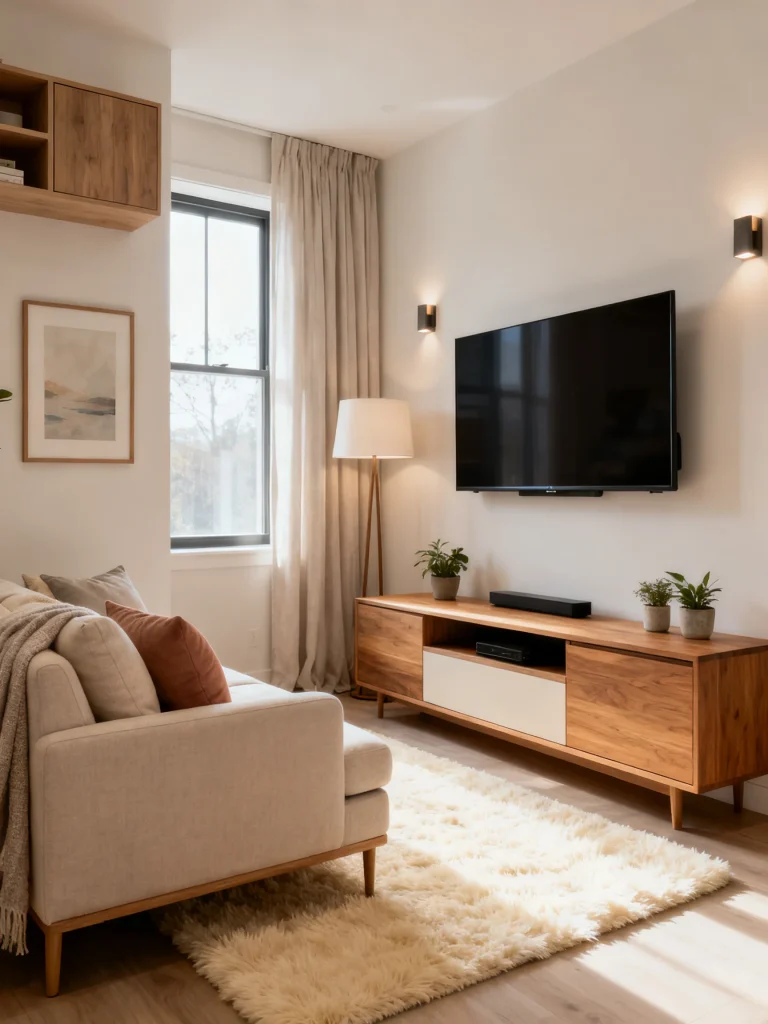
Freeing the floor visually is one of the fastest ways to make a small room feel bigger. Use a low-profile wall mount so the screen sits close to the wall. Conceal cables with an in-wall rated power kit or a paintable cord raceway that matches your wall color. If possible, center the TV at eye level when seated (usually 42–48 inches from floor to screen center). Add a floating shelf or a petite ledge below for a streaming box or soundbar, keeping silhouettes slim so the setup looks airy, not bulky.
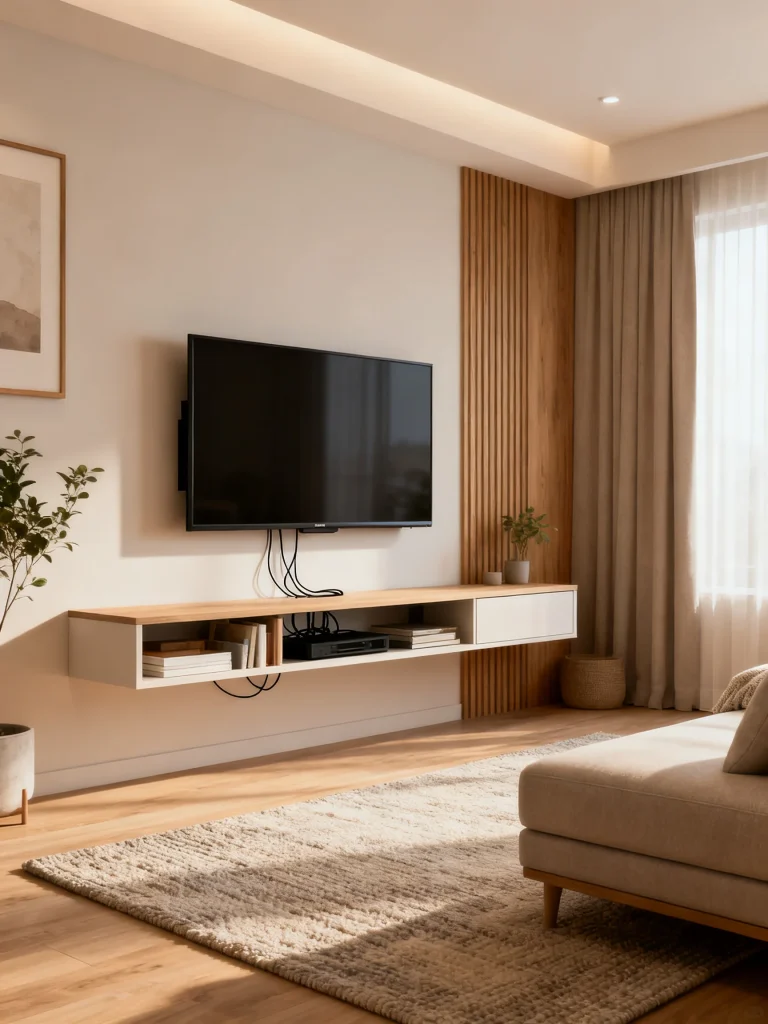
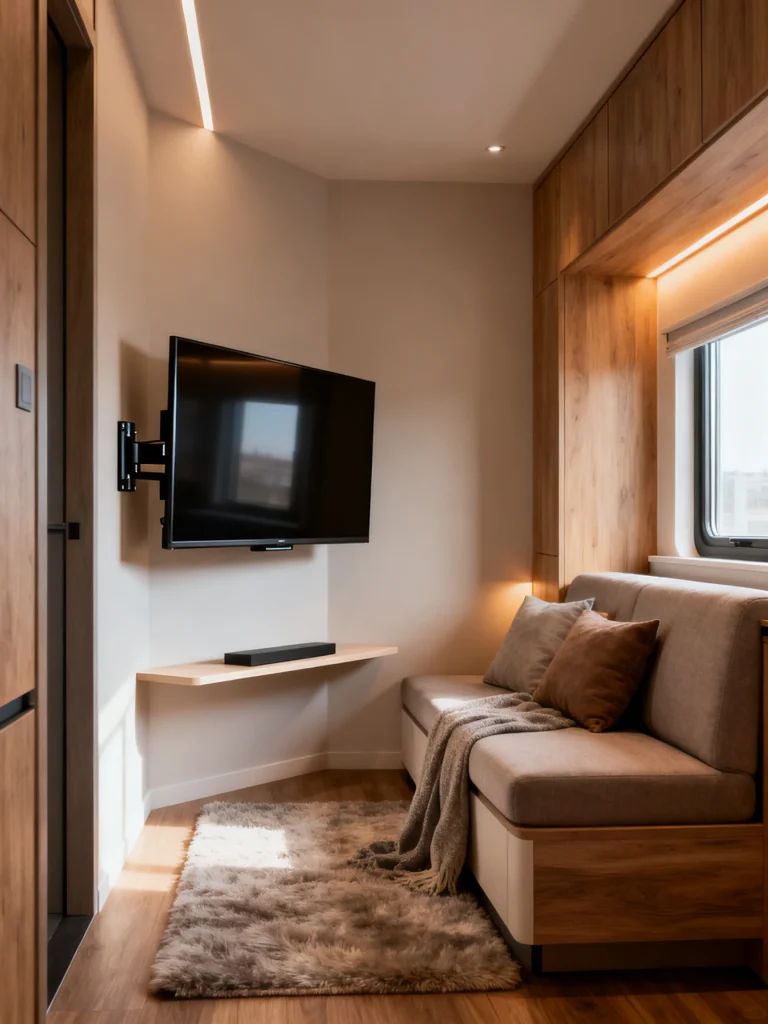
3. Tuck the TV into a corner with a swivel mount
When a straight-on wall isn’t available, a corner can become prime real estate. A swivel or articulating mount lets you angle the screen toward the seating area for movie night, then push it back to reduce visual impact when the TV is off. Pair it with a triangular or rounded corner table to hold a plant and remote basket so the corner reads as deliberate decor. This approach can also open up the main wall for a sofa, art, or shelving that gives the room much-needed depth.
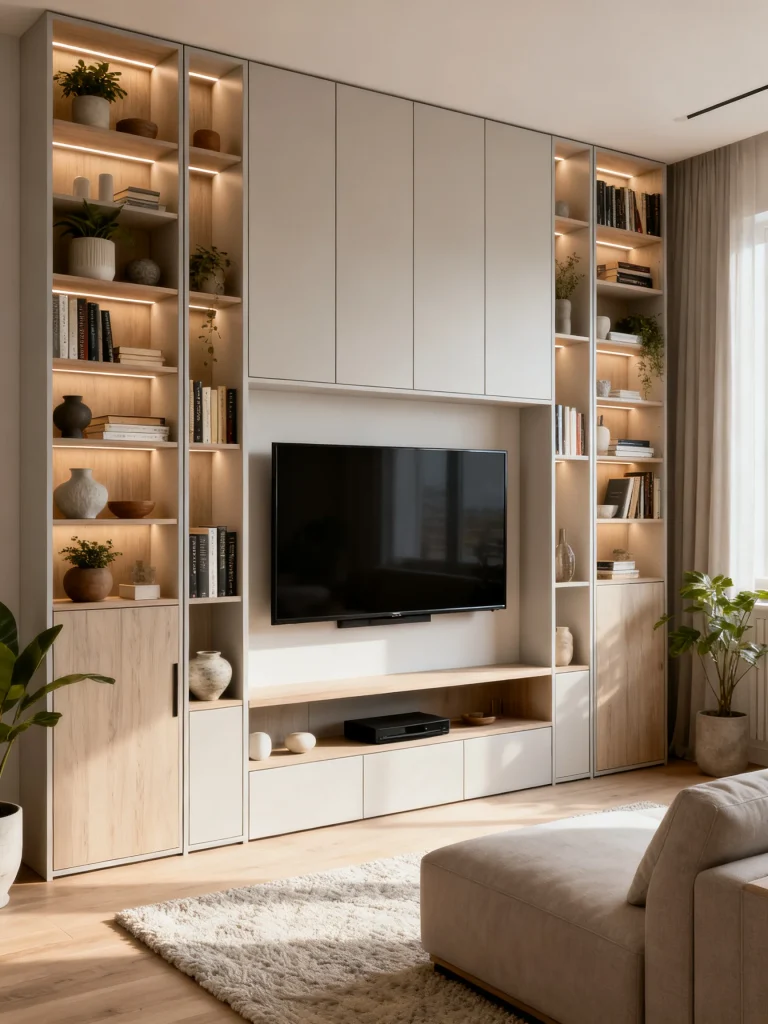
4. Build a slim TV wall with vertical storage
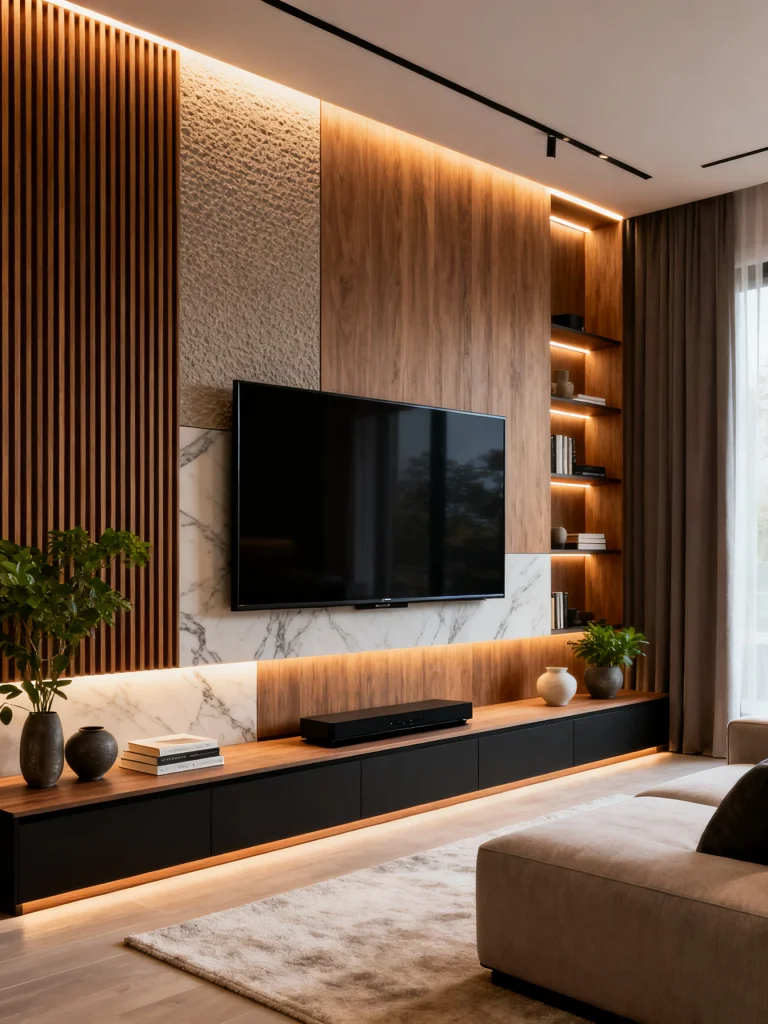
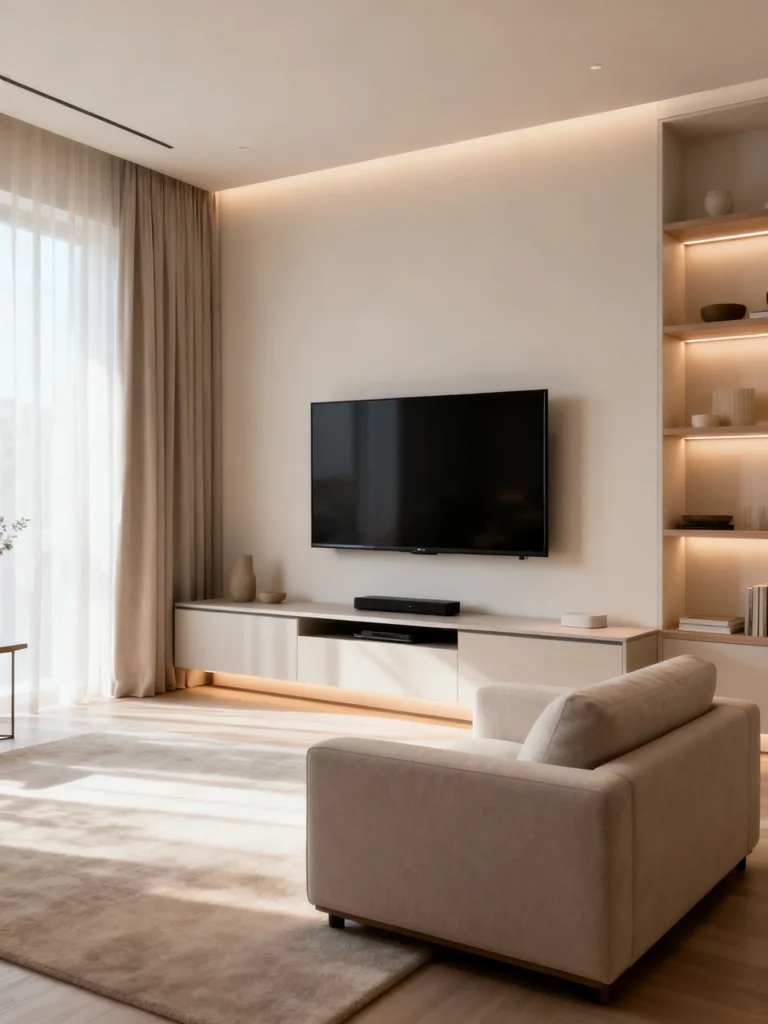
In a small living room, vertical lines trick the eye into seeing more height. Try a slim TV wall: mount the screen over a shallow (8–12 inch) floating console and flank it with tall, narrow shelves. Use closed storage at the bottom for gadgets and open shelves above for baskets and decor. Keeping all media elements contained on one wall reduces visual clutter across the room and makes tidying up fast. Stick to one or two finishes—matte black and light wood, or white and walnut—to keep the look calm and cohesive.
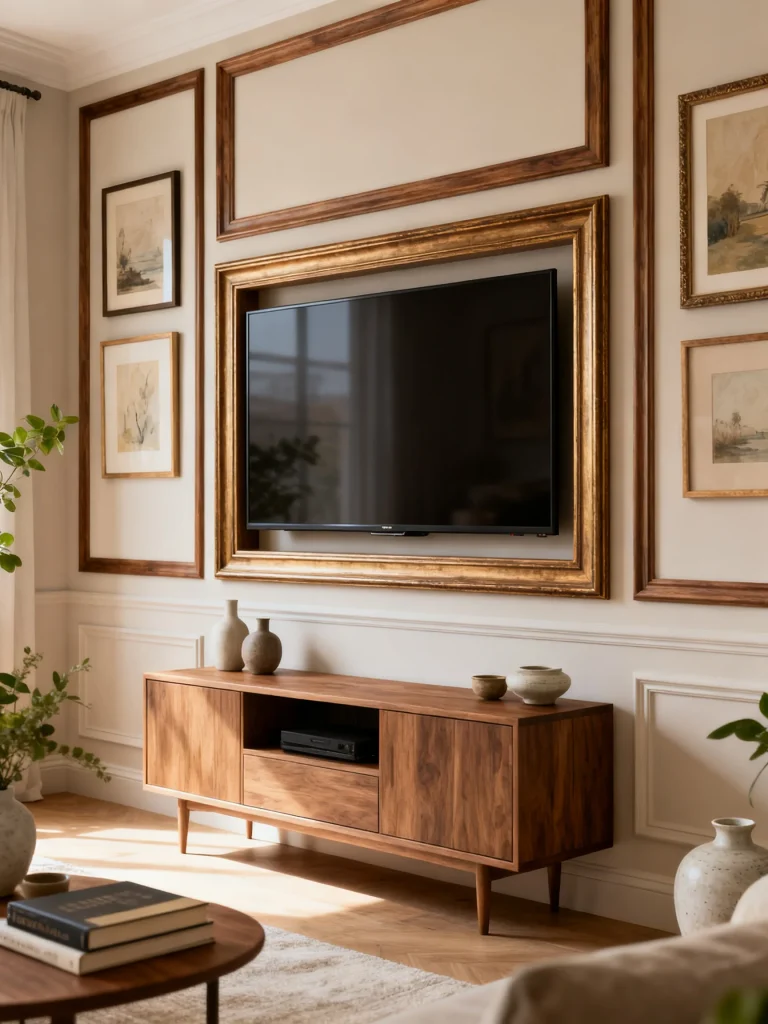
5. Make the TV “disappear” with frames and finishes
If you’d like your TV to feel more like decor, frame it visually. A gallery wall around the screen draws attention to artwork while the TV blends in. Keep the frames cohesive—thin black, brass, or maple—and echo your TV’s proportions to create harmony. If you own an art-mode TV, choose soft, warm-toned images that suit your palette when the screen is idle. Another trick: paint the TV wall a slightly deeper shade than the rest of the room; the dark backdrop helps the screen recede, so the space reads more like a curated living room and less like a media zone. If you’re working around a hearth, these fireplace and TV wall ideas show balanced layouts that save space.
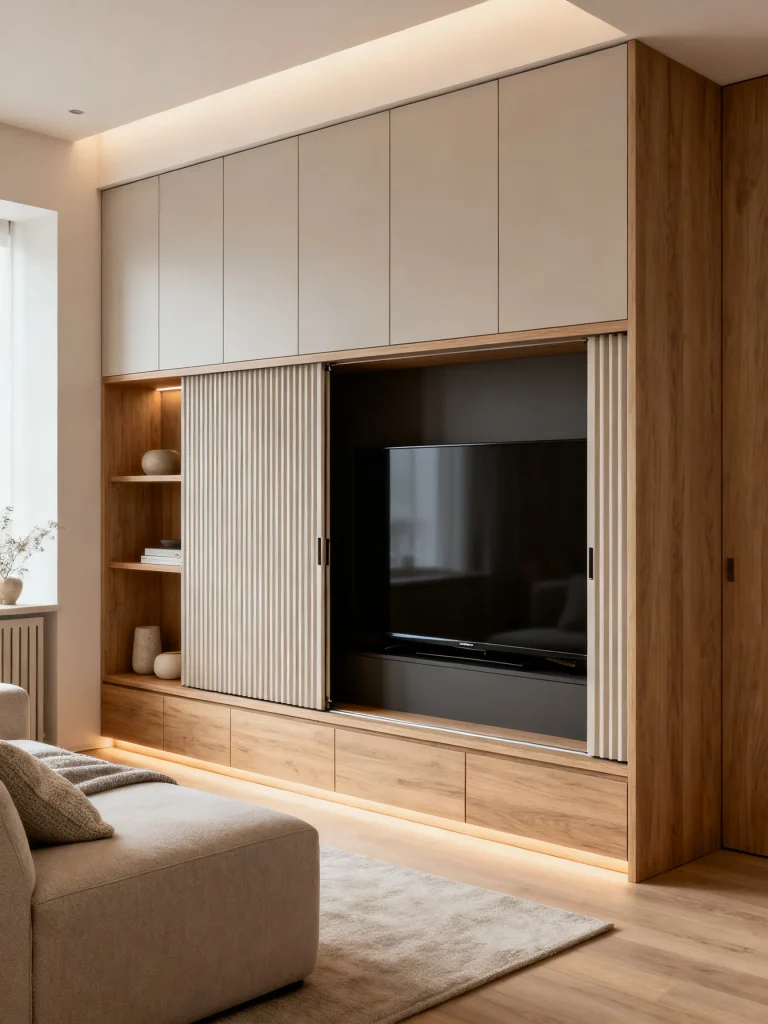
6. Hide the screen behind sliding panels or doors
Nothing beats a concealed TV for an uncluttered look. Consider slim, track-mounted fabric panels, cane doors, or simple shaker doors that slide to reveal the screen. In tiny rooms, choose lightweight materials and low-profile hardware so the doors don’t compete for space. Finish panels in the same color as your walls to keep the treatment subtle, or add texture (like rattan or linen) to bring warmth without visual weight. This idea works especially well when the living room doubles as a home office or formal sitting room.
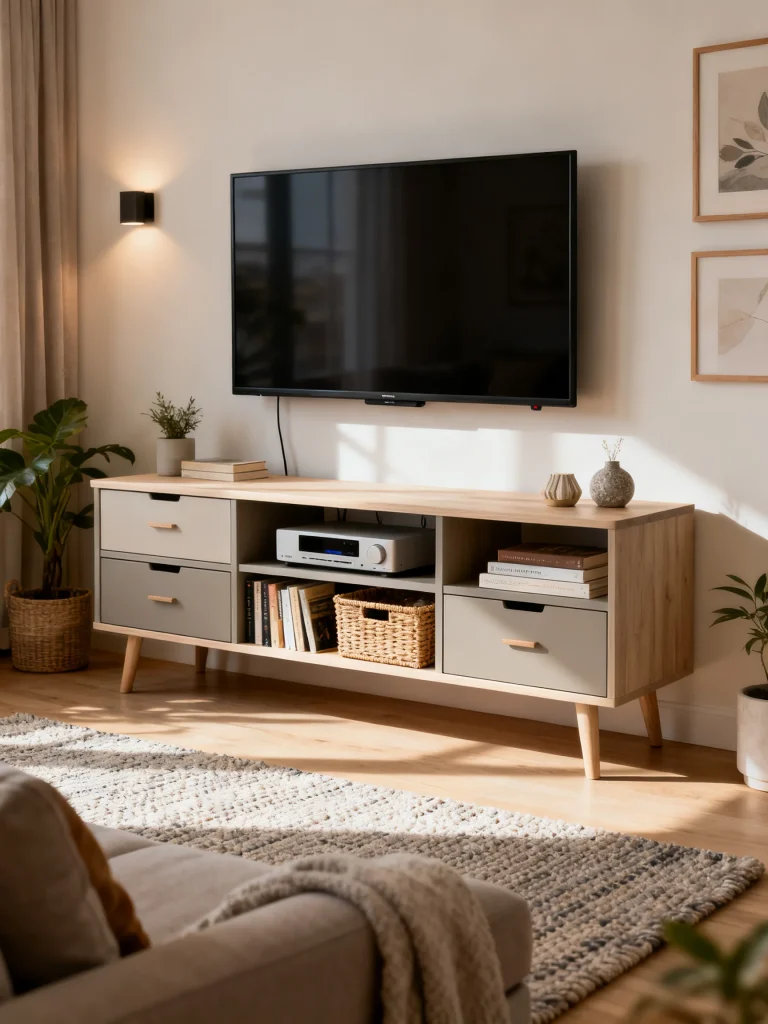
7. Go multi-functional with a petite media console
Make your furniture do more than one job. A small console with drawers can hide remotes, chargers, and game controllers, while a drop-down door can act as a perch for a laptop or controller charging dock. If you prefer open shelving, use uniform baskets so the storage looks neat, not busy. Keep the console length either slightly wider than the TV or aligned with the main sofa arm to maintain balance. Bonus move: choose wall-hung or leggy pieces that leave more visible floor area—your room will feel bigger instantly.
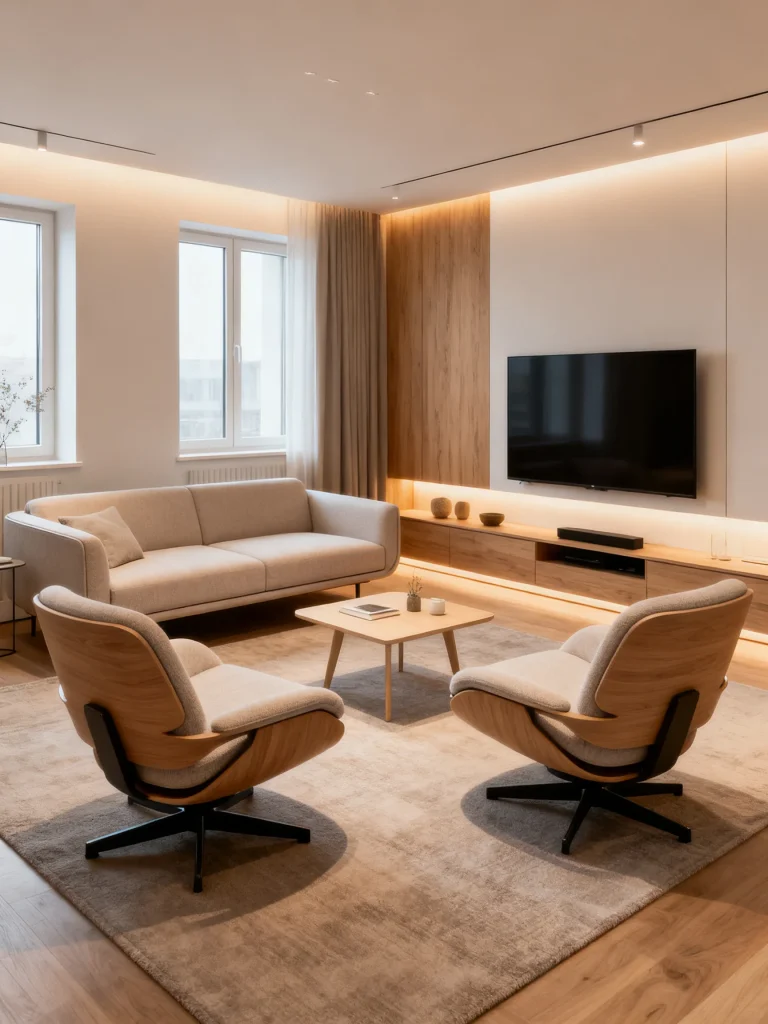
8. Create flexible seating with slim sofas and swivels
Comfort doesn’t have to take up tons of space. Opt for a slim-profile sofa (under 36 inches deep), and pair it with one or two small-scale swivel chairs. Swivels let you face the TV or turn toward a window or conversation area, which is perfect for multi-use rooms. Add a petite ottoman with hidden storage for throws and remotes, or nest two small side tables that can slide over laps during movie night. Keeping furniture light and movable makes the room feel adaptable and prevents the TV from dictating every layout choice.
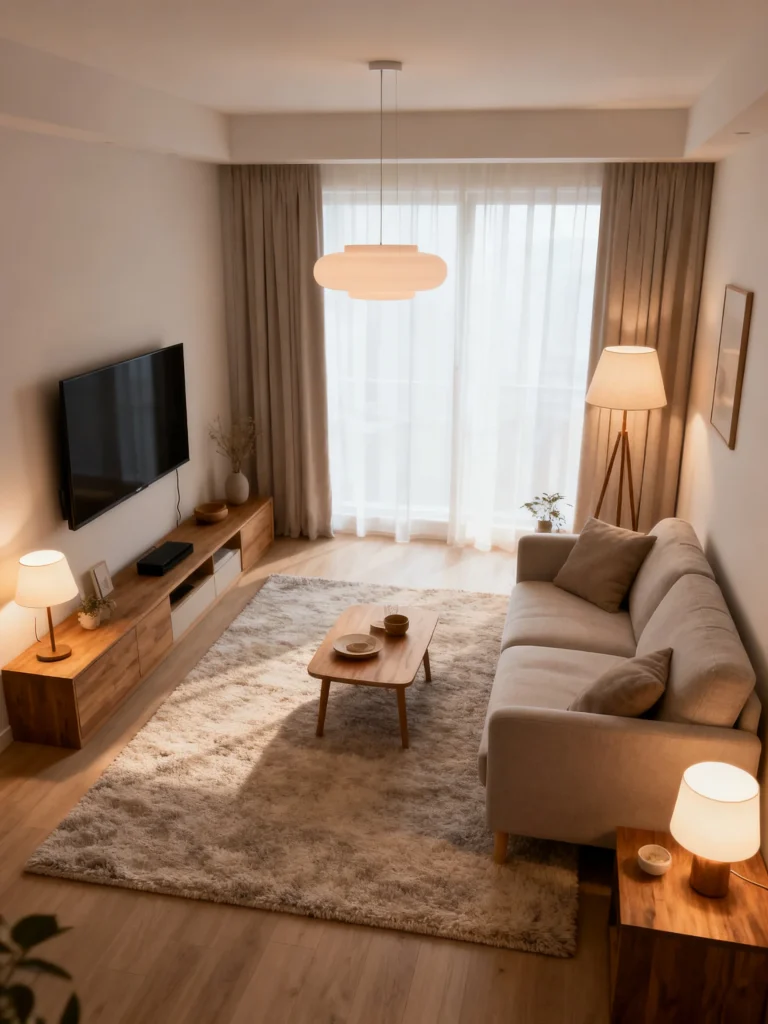
9. Define zones with rugs and layered lighting
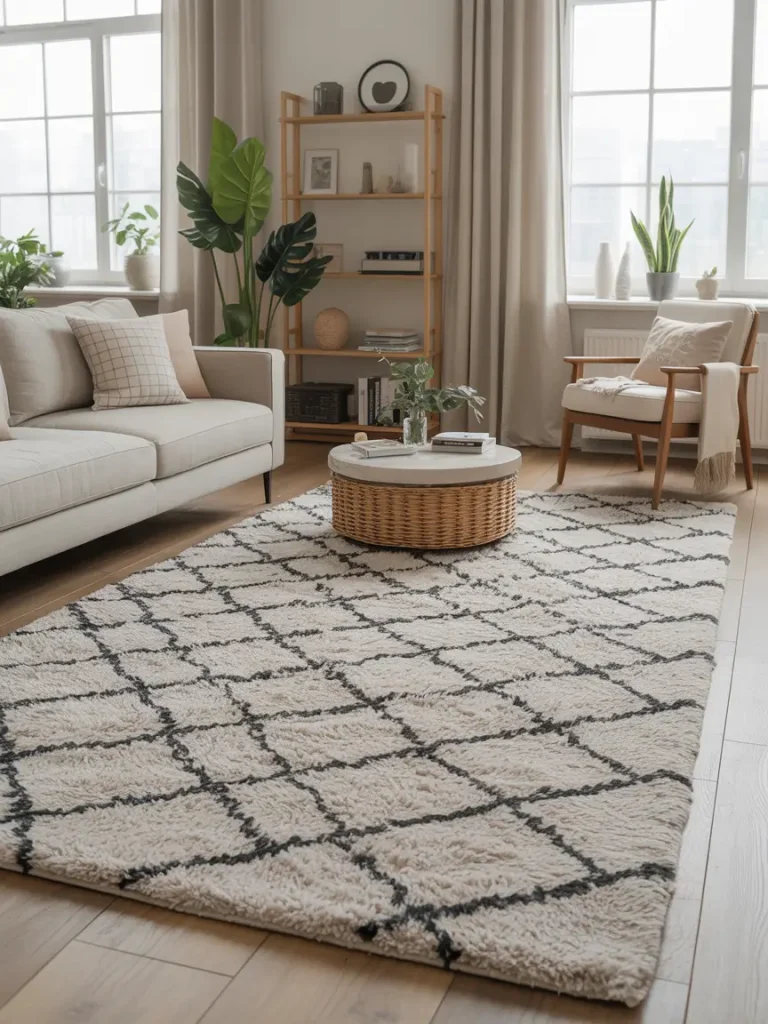
In a compact living room, zoning creates visual order. Use a correctly sized rug—ideally large enough that front sofa legs and chair legs rest on it—to anchor the seating area and calm the eye. Then layer lighting: a low-glare floor lamp near the sofa, a slim table lamp on the console, and dimmable sconces near the TV wall. Soft, indirect light reduces screen glare and makes your media nook feel considered. If the space is narrow, choose a runner-style rug paired with a petite round coffee table to maintain traffic flow.
10. Use mirrors and airy palettes to boost light
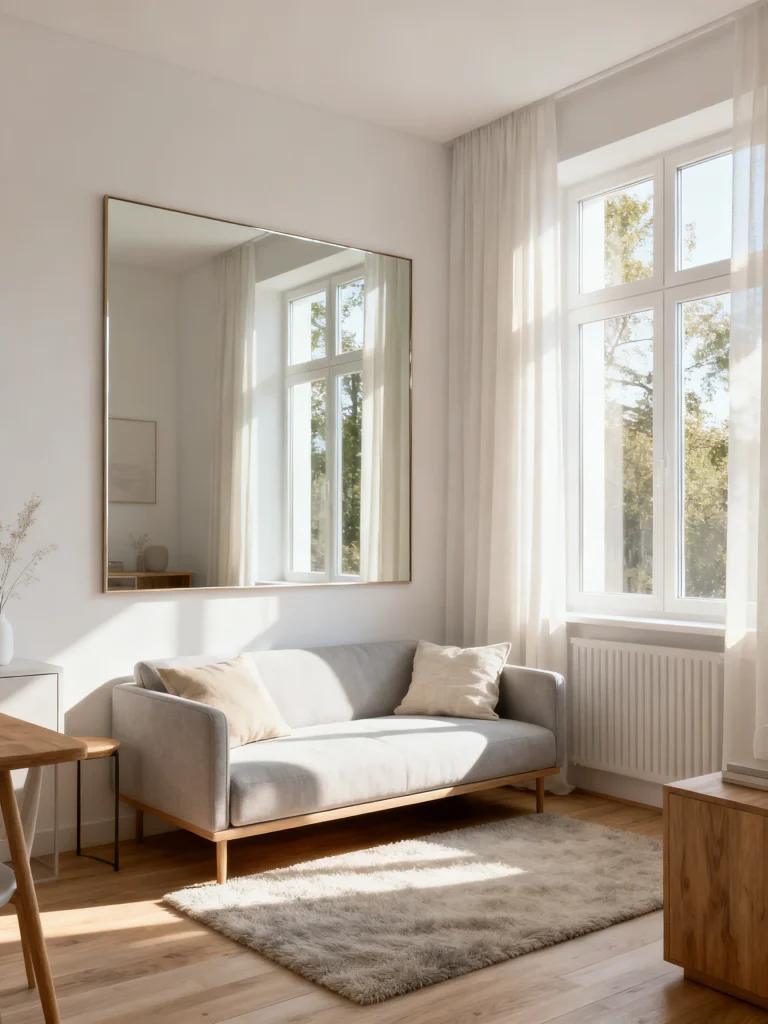
Bright rooms feel bigger. Hang a mirror opposite a window or at a slight angle to bounce light across the seating area without reflecting the TV directly. Keep your palette light and low-contrast—think soft whites, beiges, and gray-greens—then add a few dark accents (like the TV frame, a lamp base, or slim frames) to ground the look. Transparent elements like glass-topped tables, acrylic nesting tables, and open-base chairs keep sightlines long. Finish with a touch of greenery to soften hard edges and distract from tech. Not sure which dimensions or materials to choose? Check our guide to the best living room rugs.
FAQs
Most small living rooms feel comfortable with 43–55 inch TVs. Use viewing distance as your guide: sit about 1.0–1.5 times the screen diagonal away for 4K sets. If you’re closer than 5 feet, consider a 43–48 inch model for the most balanced scale.
Aim for the center of the screen to sit roughly 42–48 inches from the floor when you’re seated. If you have low-slung seating, go lower; if your sofa sits taller or you have bar seating nearby, a slightly higher mount can work. Always test with painter’s tape before drilling.
Yes, but mind heat and height. Ensure the mantel deflects heat away from the screen and keep the mount as low as possible. Tilting mounts can help with viewing angle. If the TV sits higher than ideal, angle seating or add swivel chairs for comfort.
Use a paintable surface-mounted cord cover, attach it with removable strips if allowed, and color-match to your wall. A floating shelf can hide a small power strip and streamer. Cable clips and zip sleeves keep things tidy behind furniture.
Not always, but a compact soundbar or two small bookshelf speakers can improve dialogue clarity without taking much space. Look for low-profile models that can mount under the TV or sit on a slim ledge to avoid crowding your console.
Conclusion
With the right scale, smart storage, and a few visual tricks, your small TV living room can feel open, polished, and perfectly you. Save this post for later, share it with a friend who’s decorating, and start planning your next cozy movie night—your best small-space setup is just a few tweaks away. To brighten your small space even more, browse these clever living room mirror ideas.